
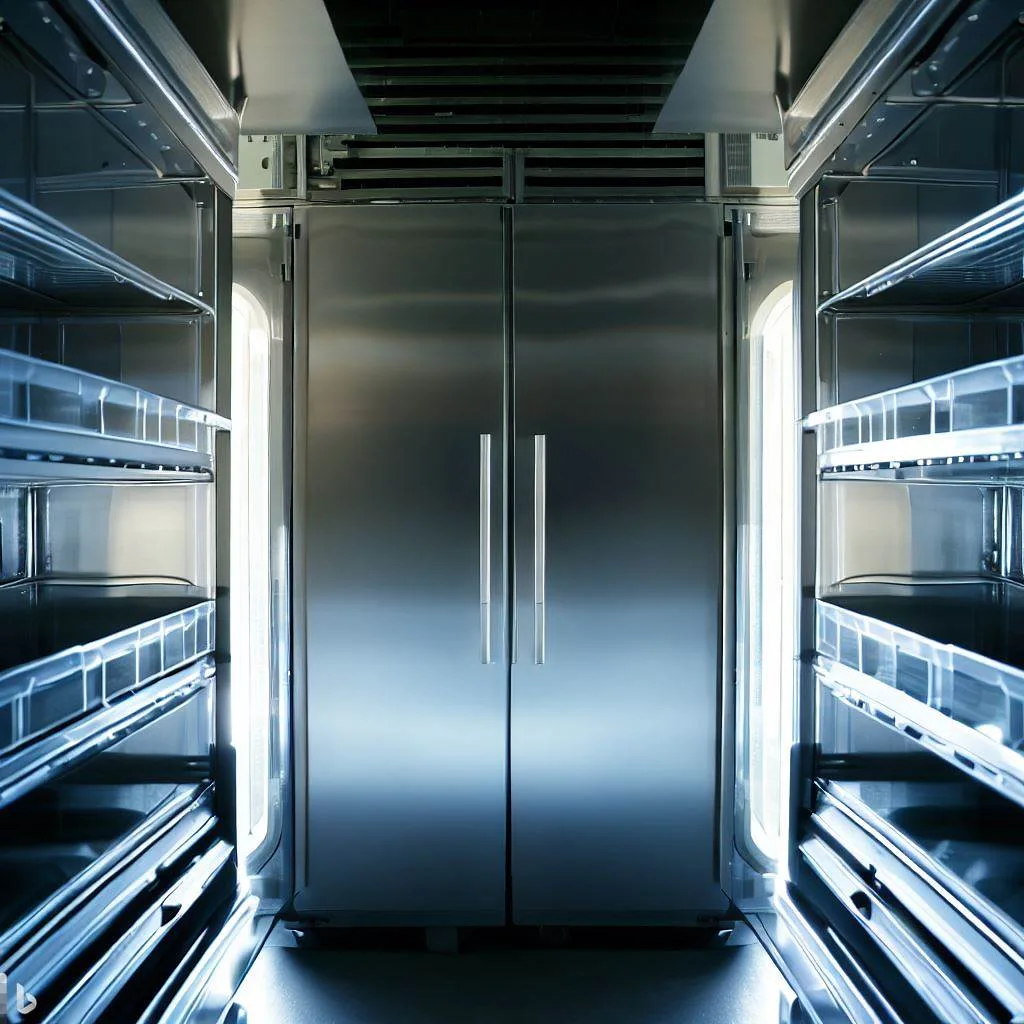
A walk-in cooler that fails during Friday dinner service doesn't just cost you the food. It costs you the service period, the emergency repair call, and — if the temperature logs weren't current — a potential health inspection citation when the inspector arrives next week and asks for records.
Commercial refrigeration maintenance is both an equipment problem and a compliance problem. In California, under CalCode, health inspectors check that refrigeration units are holding temperature, that thermometers are present and calibrated, and that temperature logs are current. A unit that hasn't been maintained is more likely to fail both tests simultaneously.
This guide covers the maintenance tasks that prevent breakdowns — organized by who does them and when — and what California operators need to document to stay compliant.
What health inspectors check on refrigeration units
In LA County, refrigeration-related violations are among the highest point deductions on the 100-point inspection scale. Under CalCode, inspectors verify:
- All refrigeration units holding at or below 41°F for cold food storage
- Freezer units maintaining 0°F or below
- A calibrated thermometer present in each unit, visible from outside or clearly positioned at the warmest point inside
- Temperature logs current — records of monitoring frequency and any temperature excursions
- Units in good repair — door gaskets intact, no ice buildup on evaporator coils, no pooling water inside the unit
- Food stored correctly: at least 6 inches off the floor, raw proteins below ready-to-eat foods, all items labeled and dated
A unit that's running but struggling — holding 44°F instead of 38°F because the condenser coils haven't been cleaned in six months — will fail this check. The violation isn't that the unit broke down. It's that the food was stored at an unsafe temperature, which averages among the highest point deductions in LA County inspection data.
If your walk-in cooler isn't holding temperature or your walk-in freezer isn't freezing, those are emergency situations — not maintenance items. Call for service immediately and document the temperature excursion in your log.
Daily tasks — kitchen staff
- Check and log temperatures in all units at the start and end of each service period. Two readings per day minimum — more for high-risk storage (raw proteins, dairy)
- Verify door gaskets are sealing — a gasket that's not sealing allows warm air infiltration that raises interior temperature and forces the compressor to run harder
- Check for condensation or pooling water inside units — early indicator of door seal failure or drainage issue
- Verify no food is stored directly on the floor inside walk-in units — 6-inch clearance minimum under CalCode
- Log any temperature readings outside the acceptable range and the corrective action taken
Weekly tasks — kitchen manager
- Clean door gaskets with a food-safe cleaner — gaskets trap food debris and moisture that accelerate wear and promote mold growth. A cracked or torn gasket needs replacement, not just cleaning
- Wipe down interior walls and shelving — spills and debris that sit for weeks become food sources for bacteria and, if near gaskets, accelerate seal degradation
- Check that the drain pan is clear — blocked drain pans cause water to pool inside the unit, which the compressor then has to work against
- Verify thermometer calibration — a thermometer that reads 2°F low means your unit may be holding food at 43°F when you think it's at 41°F. Calibrate with ice water (should read 32°F) monthly or replace
- Review the temperature log for the week — look for patterns (consistently warmer in the afternoon, readings creeping up over time) that indicate a maintenance issue developing
Monthly tasks — manager or designated staff
- Clean condenser coils — dust and grease accumulation on condenser coils is the single most common cause of reduced cooling efficiency. In a commercial kitchen near fryers or griddles, coils accumulate grease faster than manufacturer baselines assume. Monthly cleaning in LA County kitchens is the standard; quarterly is the minimum for lower-volume operations
- Check evaporator coils for ice buildup — ice accumulation on evaporator coils indicates either a defrost cycle issue or airflow restriction. Small amounts are normal; heavy buildup requires technician attention
- Inspect door hinges and closers — a door that doesn't close fully or requires manual effort to latch is losing cold air constantly
- Check fan blades for grease accumulation — fan blades coated in grease move less air, reducing cooling efficiency across the entire unit
- Walk-in units: inspect floor drains and the floor surface around the unit for signs of water intrusion or seal failure at the base
Professional service — every 6 to 12 months
In-house maintenance handles what staff can access and observe. Professional service handles what requires specialized equipment or refrigerant certification:
- Refrigerant level check — low refrigerant causes the unit to run constantly without achieving target temperature. Refrigerant handling requires EPA 608 certification; this is not a task for in-house staff
- Deep condenser and evaporator coil cleaning — professional cleaning with commercial coil cleaner removes buildup that routine cleaning misses
- Electrical connections and control board inspection — loose connections and failing controls often present as intermittent temperature instability before they cause complete failure
- Compressor and fan motor inspection — bearing wear, capacitor degradation, and belt tension (on belt-driven units) are things a technician identifies during a PM visit that staff won't catch during daily checks
- Door gasket replacement if worn — if gaskets are no longer sealing cleanly after cleaning, replacement is cheaper than the energy cost of running a unit with air infiltration
- Service documentation — keep dated records of each professional service visit, what was inspected, what was found, and what was repaired. California health inspectors may request equipment maintenance records during an inspection
In LA County and Southern California, where ambient kitchen temperatures are high and cooking equipment runs at heavy volume, semi-annual professional service is appropriate for most full-service restaurants. Annual service is the minimum for lower-volume operations.
Temperature logging — the documentation that protects you
A temperature log does two things: it's the early warning system that catches a unit drifting before it crosses the violation threshold, and it's the evidence that demonstrates compliance when an inspector asks for records.
What a compliant temperature log includes:
- Date and time of each reading
- Unit identifier (walk-in cooler, reach-in #1, etc.)
- Temperature reading
- Staff initials
- Corrective action column — what was done if the reading was outside the acceptable range
Keep logs on-site and accessible. In LA County, an inspector who finds a unit holding 43°F and no temperature log to show when the issue started will cite both the temperature violation and the documentation gap. The log that shows you caught the issue, logged it, and called for service is a meaningful difference in how the citation is handled.
For the cleaning-specific tasks — interior surfaces, shelving, drain pans, and the procedures that keep units hygienic rather than just functional — the refrigeration cleaning guide covers what to clean, how often, and whether it's in-house or professional work. For context on how refrigeration temperature violations factor into LA County health inspection scores, the analysis of 31,856 LA County inspections covers the full violation dataset.
Frequently asked questions
How often should I service my commercial refrigerator?
Regular maintenance should include daily cleaning and inspection, with professional servicing scheduled at least 2-4 times per year depending on usage. More frequent servicing may be needed for units operating in high-use environments to prevent breakdowns and maintain food safety compliance.
What happens if my restaurant refrigeration fails during service?
A refrigeration failure can result in thousands of dollars in food spoilage, operational disruptions, and emergency repair costs that are significantly higher than preventive maintenance. It can also damage your restaurant's reputation and lead to negative customer reviews.
Can dirty refrigerator coils increase my energy bills?
Yes, dirty condenser coils force the compressor to work harder, significantly increasing energy consumption and your electricity costs. Regular cleaning of coils is one of the most effective ways to improve efficiency and reduce operational expenses.
What are the health code violations related to refrigeration maintenance?
Malfunctioning refrigeration units that fail to maintain safe storage temperatures can lead to bacterial contamination, health code violations, and fines or forced closure by health inspectors. Proper maintenance ensures compliance and protects food safety.
Ready when you are
Running into issues with your kitchen
Our team coordinates vetted technicians across Southern California, same day for emergencies.