
The restaurant operator's guide to
a kitchen that keeps running
Practical advice on equipment maintenance, compliance, and repairs. Written by the team that manages back-of-house for hundreds of restaurants across Southern California.
Trending this week
Preventive Maintenance · Featured
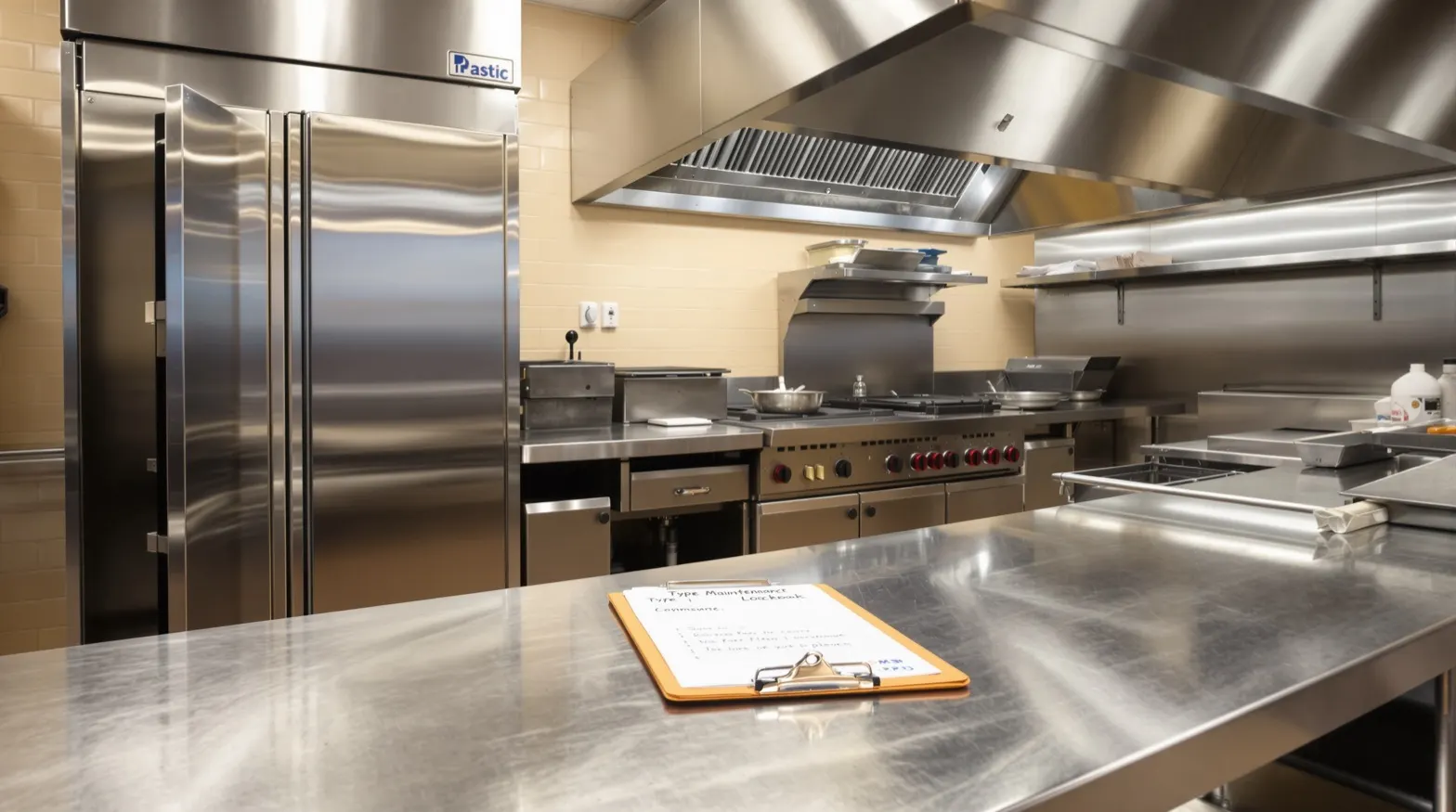
Equipment-class PM intervals: what walk-ins, ice machines, hoods, fryers, dishwashers, and ranges actually need
A practitioner PM cadence guide by equipment class: what walk-ins, ice machines, Type 1 hoods, fryers, dishwashers, and ranges actually need, what skipping a cycle costs, and how to track it.
June 19, 2026 · 12 min readRead the article →
Latest articles
Repairs & Breakdowns
Walk-in cooler down on a Friday at 9pm: the triage decision tree before you call anyone
When a walk-in cooler stops holding temperature mid-service, the first hour decides whether the night is a recoverable repair or a five-figure inventory loss. The decision tree the kitchen manager should run before the emergency call.
June 19, 202610 min
Compliance & Inspections
Multi-location restaurant compliance documentation: the retrieval problem and how to solve it
For multi-unit operators, compliance documentation is rarely a documents problem. It is a retrieval problem: the records exist, but finding them in fifteen minutes when an inspector asks is the operational failure. Here is how to fix it.
June 19, 20269 min
Preventive Maintenance
Hobart, Hoshizaki, Vulcan: the commercial-kitchen equipment brands every operator should know, and what each tends to fail on
Every commercial-kitchen brand has a personality and a way it tends to die. A brand-by-brand operator field guide to what goes wrong, why, and what to do before it does.
June 19, 202610 min
Costs & Budgeting
The cost of vendor sprawl: what 15 separate kitchen-trade vendors actually costs a multi-unit operator
The four cost bands of vendor sprawl, how to measure each one on your own operation, and a Monday-morning sheet for putting numbers against the invisible tax.
June 19, 20269 min
Repairs & Breakdowns
Same-day kitchen equipment repair in Los Angeles: what 'fast' actually means
Every restaurant repair vendor claims same-day service, and most mean something different by it. What to ask, what to verify, and what to expect when a hot line goes down at 5pm.
June 19, 20269 min
Costs & Budgeting
What does a restaurant facilities maintenance program actually cost? A range-and-driver framework
The six drivers that explain restaurant facilities program pricing, trade mix, location count, SLA tier, geography, compliance complexity, and integration scope, and how to estimate your own range.
June 19, 202610 min
Something broke down during service
We dispatch vetted technicians across Southern California. Same day for emergencies, with full documentation in your account.
Costs & Budgeting
Restaurant facilities management RFP: what to ask, what the answers actually mean
A buyer-side RFP framework for multi-unit restaurant operators evaluating facilities maintenance vendors: six categories, thirty questions, a weighted scoring rubric, a reference-check script, and a 60-day evaluation timeline.
June 19, 202613 min
Repairs & Breakdowns
Commercial kitchen equipment symptoms: safe operator checks before you call
A symptom index for commercial kitchen equipment: the safe operator checks for walk-ins, ice machines, fryers, ranges, hoods, and dishwashers, plus when to stop and call dispatch.
June 19, 20269 min
Compliance & Inspections
Licensed and bonded restaurant maintenance vendors: what 'licensed' actually means and how to verify it
Every restaurant maintenance vendor claims to be licensed and bonded. Half can't tell you what license. What it actually means in California, how to verify it in under five minutes, and which trades require which classification.
June 19, 20269 min
Most read by operators
Browse by topic
82 articles
Preventive Maintenance
Scheduled service that keeps your equipment running and avoids emergency shutdowns.
Browse articles →24 articles
Compliance & Inspections
Health codes, fire safety, NFPA 96, and what inspectors actually cite in Southern California kitchens.
Browse articles →31 articles
Repairs & Breakdowns
What to do when something breaks mid-service, and how to avoid the next failure.
Browse articles →18 articles
Costs & Budgeting
Real price ranges for every service, plus how to budget for maintenance without surprises.
Browse articles →32 articles
Kitchen Operations
Systems, checklists, and team practices that keep your back-of-house running smoothly.
Browse articles →