
In this article · 7 sections
- What health inspectors look for inside refrigeration units
- Daily cleaning — kitchen staff
- Weekly cleaning — kitchen manager or designated staff
- Monthly deep cleaning — manager level
- When to bring in professional cleaning
- Reach-in vs walk-in — what changes
- Common cleaning mistakes that cause inspection citations
Commercial refrigeration cleaning is not the same as refrigeration maintenance. Maintenance addresses mechanical components — coils, compressors, refrigerant levels, door closers. Cleaning addresses surfaces, drains, gaskets, and the hygiene of the storage environment. Both matter for equipment longevity, but only cleaning directly affects food safety compliance and what a health inspector sees when they open your walk-in door.
In California under CalCode, health inspectors check refrigeration units for cleanliness as part of the routine inspection. A unit that's mechanically sound but visibly dirty — spills on shelving, mold on door gaskets, debris in drain pans — is a citable violation. This guide covers what to clean, how often, and what requires professional service versus in-house staff.
What health inspectors look for inside refrigeration units
Under CalCode, inspectors evaluate refrigeration units for:
- Interior surfaces clean and free of food debris, spills, and mold
- Shelving and racks clean — no sticky buildup, residue, or rust
- Door gaskets intact and free of mold or food debris
- Drain pans and drain lines clear — no standing water, no organic buildup
- No evidence of pest activity inside or immediately around units
- Food stored correctly — labeled, dated, at least 6 inches off the floor, raw proteins below ready-to-eat foods
A walk-in with moldy door gaskets or a reach-in with spill residue on shelving will generate a citation regardless of the temperature reading. Cleanliness and temperature compliance are evaluated independently — a unit that passes one doesn't automatically pass the other.
Daily cleaning — kitchen staff
- Wipe down door handles and high-touch exterior surfaces — handles accumulate grease and food contact contamination during every service period
- Check for and clean up spills inside units immediately — spills that sit overnight harden and become significantly harder to remove, and they create conditions for bacterial growth
- Verify door seals are closing fully — a door that's not sealing properly isn't a cleaning issue, but the daily check catches it before it becomes a temperature problem
- Remove expired or spoiled items — these generate odors that permeate other stored food and attract pests
Weekly cleaning — kitchen manager or designated staff
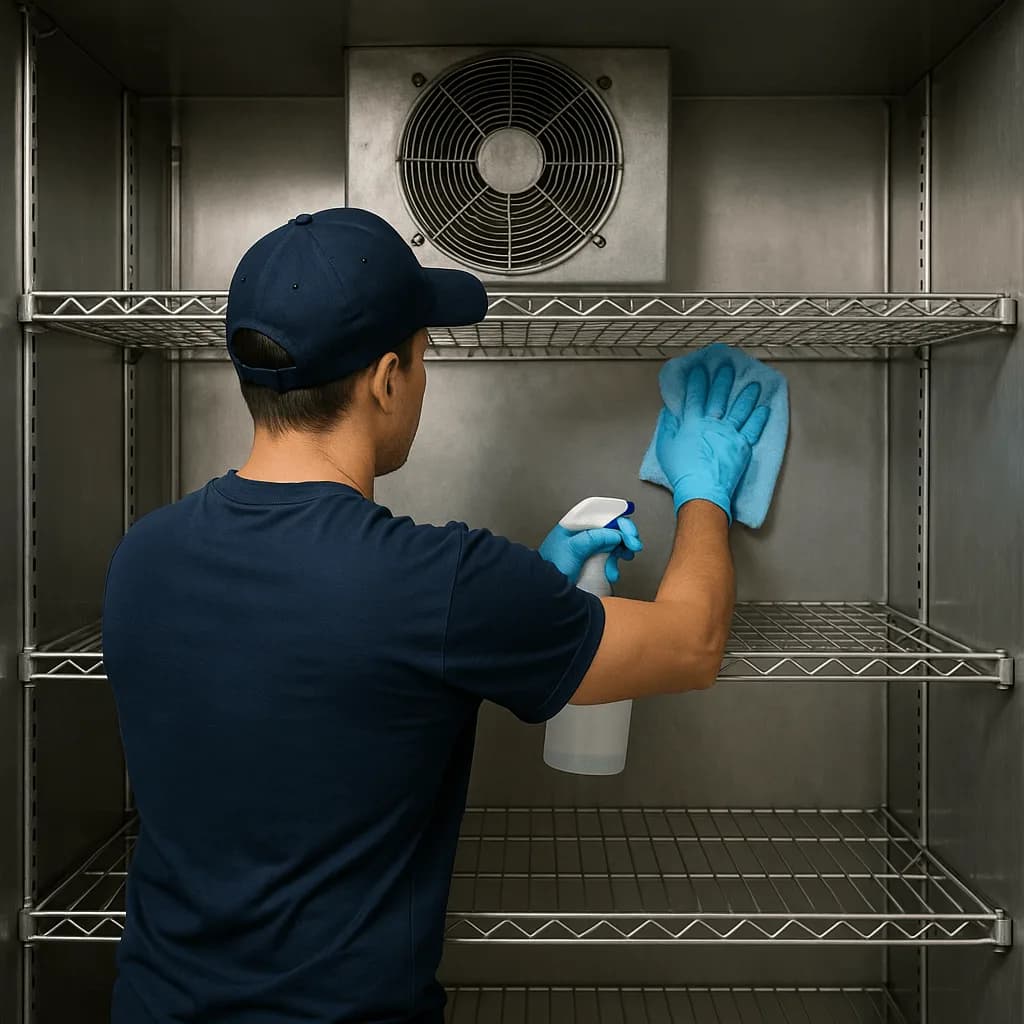
- Empty and wipe down all shelving and racks — remove items section by section rather than all at once to minimize food safety risk during the process
- Clean interior walls and floor of walk-in units — use a food-safe cleaner approved for use in refrigerated environments. Pay attention to corners and the junction of wall and floor where debris accumulates
- Clean door gaskets thoroughly — use a soft brush or cloth to work cleaner into the folds of the gasket where food debris embeds. If gaskets are discolored or show mold that doesn't clean off, they need replacement
- Inspect and empty drain pans — drain pans that are allowed to fill develop organic buildup that produces odors and can overflow into the unit interior
- Clean the exterior of reach-in units — tops, sides, and the area directly behind and beneath units where grease and dust accumulate
Monthly deep cleaning — manager level
- Clean condenser coils — in a commercial kitchen environment, grease from cooking equipment settles on condenser coils and reduces cooling efficiency. Use a soft brush and coil-safe cleaner; never use compressed air toward food storage areas
- Flush drain lines — pour a food-safe drain cleaner through each unit's drain line to clear organic buildup before it causes a blockage. A blocked drain line causes water to pool inside the unit
- Clean evaporator fan covers and accessible fan blades — grease-coated fan components reduce airflow across the evaporator coil
- Inspect the floor beneath and behind all units — grease, water, and food debris accumulate in these areas and attract pests. This area is also what an inspector checks when they look under equipment during a routine visit
- Walk-in coolers: clean the ceiling and lighting fixtures — moisture and food vapors condense on ceiling surfaces in walk-in units, and mold growth on ceiling fixtures is a citable violation
When to bring in professional cleaning
Professional refrigeration cleaning covers components and situations that in-house cleaning can't adequately address:
- Evaporator coil deep cleaning — evaporator coils that have developed scale or heavy grease buildup require professional cleaning with commercial coil cleaner and proper equipment to avoid damaging the fins
- Drain line clearing after a blockage — a drain line that's already backed up needs clearing with professional equipment, not a drain cleaner flush
- Walk-in unit full interior cleaning after a spillage event — a major spill (broken container, failed product) inside a walk-in requires professional sanitization to ensure all surfaces are addressed
- Mold remediation — visible mold growth on walls, ceiling, or structural components of a walk-in requires professional treatment, not just surface cleaning
- Pre-inspection deep clean — for operations that want documentation of a professional cleaning prior to an inspection cycle
Reach-in vs walk-in — what changes
Reach-in units are accessed multiple times per service period. Door gaskets wear faster, interior surfaces accumulate spills more frequently, and condenser coils are often in more exposed positions where they collect kitchen grease. Weekly cleaning of interior surfaces and monthly condenser cleaning is appropriate for most reach-in units in active commercial kitchens.
Walk-in coolers and freezers have larger surface areas that require more systematic cleaning — section by section rather than all at once. They also have specific considerations: the floor drain is critical and must be kept clear; the ceiling is often overlooked but accumulates condensation and mold; and the evaporator unit typically requires professional cleaning when buildup becomes significant.
In LA County, where ambient temperatures are consistently high during summer service, walk-in units work harder and accumulate condensation faster than in cooler climates. Drain maintenance frequency should increase during warmer months.
Common cleaning mistakes that cause inspection citations
- Cleaning around stored food rather than removing it first — surfaces cleaned while food is in place aren't actually cleaned; cleaning products can also contaminate stored food
- Using the wrong cleaning products — abrasive cleaners scratch stainless steel surfaces, creating grooves where bacteria accumulate; bleach-based cleaners used on gaskets accelerate rubber degradation
- Skipping drain pan cleaning until odors develop — by the time the odor is noticeable, the drain pan has weeks of organic buildup that requires more than a wipe-down
- Not drying surfaces after cleaning — wet surfaces inside a refrigerated unit promote mold growth faster than dry ones, particularly on gaskets and wall junctions
- Overlooking the area behind and beneath units — inspectors check this area; grease and pest evidence here generate citations even when the unit interior is clean
For the mechanical maintenance tasks that run alongside the cleaning schedule — condenser coil inspection, compressor checks, temperature logging, and professional service intervals — the refrigeration maintenance guide covers what to do and how often. For context on how refrigeration citations factor into LA County health inspection scores, the analysis of 31,856 LA County inspections covers the full violation breakdown.
Frequently asked questions
How often should you clean commercial refrigeration units?
The article recommends regular cleaning routines, though specific frequencies depend on your unit type and usage. Daily spot-cleaning of spills and weekly deep cleaning of interior surfaces is standard practice for most restaurants, with coils and external components requiring monthly attention.
What happens if you don't clean commercial refrigerators regularly?
Dirty refrigeration units can fail health inspections, develop mold and bacterial growth that compromise food safety, and force compressors to work harder, increasing energy costs and risking unexpected breakdowns. Buildup on coils and vents also reduces equipment lifespan and efficiency.
Should restaurants hire professionals to clean commercial refrigeration or do it in-house?
The article covers both options—in-house cleaning works for routine maintenance and daily spill cleanup, but professional cleaning services are recommended for technical components like coils, fans, and vents that require specialized equipment and expertise.
What areas of a commercial fridge are most important to clean?
Key areas include gaskets and seals (where mold grows), drain pans (where bacteria accumulate), shelves and surfaces (food contact areas), coils and fans (for equipment performance), and hard-to-reach corners where condensation and debris collect. Each requires different cleaning approaches.
Ready when you are
Running into issues with your kitchen
Our team coordinates vetted technicians across Southern California, same day for emergencies.