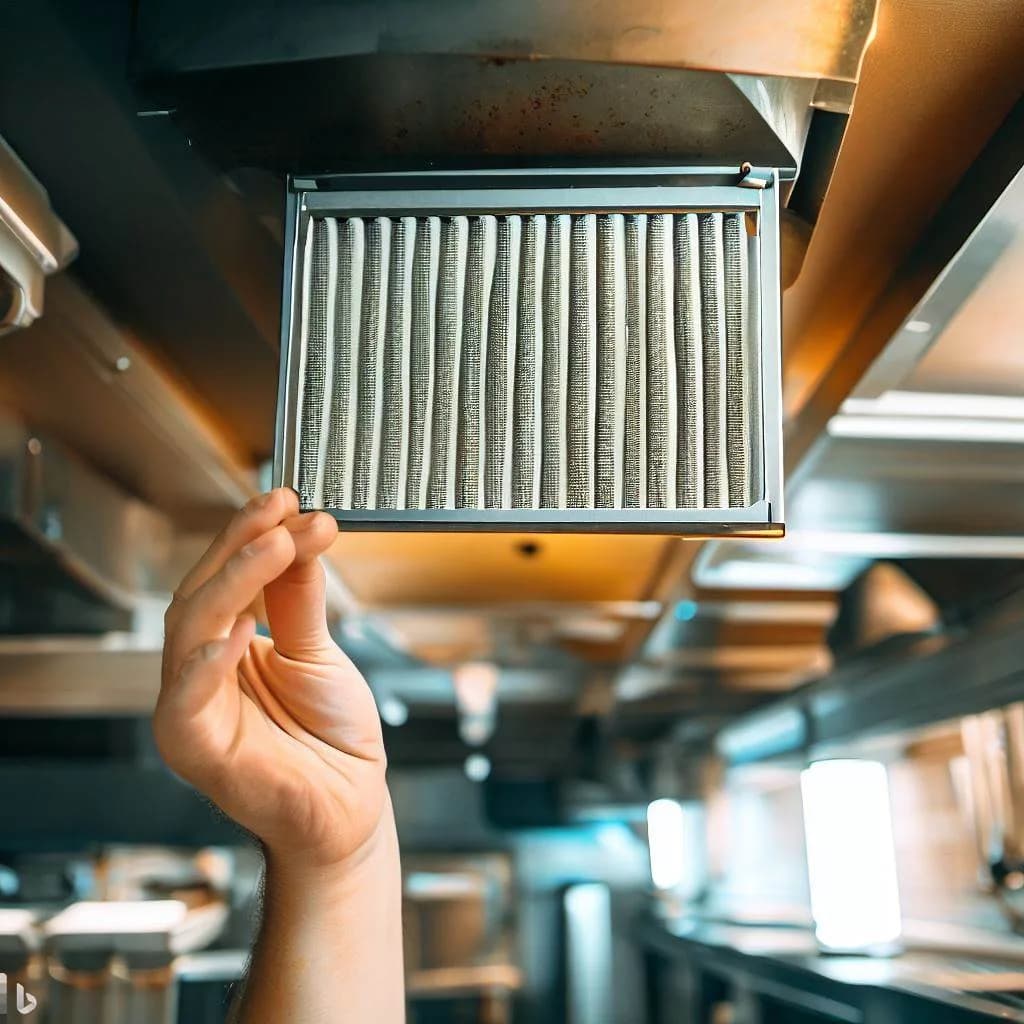
There is no universal answer to how often a commercial hood filter needs to be changed or exchanged. The interval depends on what you're cooking, how much of it, and whether your current filters are keeping up. A filter schedule built around a calendar date rather than actual filter condition is either over-servicing low-volume kitchens or under-servicing high-volume ones.
Here is how to set the right interval for your specific operation — and how to know when the current schedule isn't working.
The variable that drives everything: grease production rate
Hood filters load with grease at a rate determined primarily by cooking equipment, not by cooking volume in the sense of covers served. Two kitchens doing the same number of covers can have radically different filter loading rates depending on what's on the cooking line.
Equipment ranked by grease production rate, highest to lowest:
- Solid fuel cooking (wood-fired ovens, charcoal grills, mesquite broilers) — highest grease and particulate output. Filters in these kitchens load in days, not weeks.
- Charbroilers — high grease output, especially with fatty proteins. A busy charbroiler line can saturate filters in a week of normal service.
- Wok stations — high-heat, high-oil cooking produces significant grease-laden vapor. Similar loading rate to charbroilers.
- Heavy fryer use — multiple fryers running at capacity produce substantial grease vapor, particularly during temperature recovery after large batch loads.
- Gas ranges and convection ovens — moderate grease output. Standard cooking on a gas range produces grease vapor but at significantly lower rates than the equipment above.
- Combination kitchens — the loading rate is set by the highest-output equipment on the line, not the average. A kitchen with one charbroiler and four gas burners has a charbroiler loading rate.
Frequency guidelines by kitchen type
Solid fuel or charbroiler-heavy kitchens
Filter inspection every 2 to 3 days during normal operation. Exchange or cleaning every 5 to 7 days. These kitchens are also in the monthly hood cleaning category under NFPA 96 Table 11.4 — the filter schedule and the professional cleaning schedule need to be set together, not independently.
High-volume kitchens with wok stations or significant fryer use
Filter inspection weekly. Exchange or cleaning every 1 to 2 weeks. In LA County during summer months, when ambient kitchen temperatures are highest, move toward the shorter end of this range — heat accelerates grease deposition on filter surfaces.
Moderate-volume full-service restaurants with standard equipment
Filter inspection weekly. Cleaning every 2 to 4 weeks. This is the most common category for mid-size restaurants in LA County operating gas ranges and standard fryers at moderate volume.
Lower-volume operations
Monthly inspection and cleaning is typically sufficient. If filters show minimal loading at monthly inspection, the interval can extend — but inspection should remain monthly so the schedule can adjust if volume increases.
Clean vs exchange: what the decision comes down to
The choice between cleaning filters in-house and exchanging them through a professional service depends on filter condition, staff capacity, and how quickly filters load.
In-house cleaning works when: filters haven't reached the polymerization stage — grease that has hardened through repeated heat cycles into a varnish-like layer that standard degreasing can't fully remove. A filter that soaks and scrubs clean in 20 to 30 minutes with commercial degreaser is a good candidate for in-house cleaning. A filter that requires an hour of scrubbing and still feels tacky afterward is not.
Professional exchange works better when: filters load faster than in-house cleaning can realistically keep up with; the kitchen doesn't have the setup for effective in-house cleaning (large enough sink, hot water, commercial degreaser); or filters have reached polymerization and in-house cleaning is producing diminishing returns.
In practice, high-volume kitchens with charbroilers or wok stations in LA County almost always find that professional exchange is more efficient than in-house cleaning — the loading rate is simply too fast for in-house cleaning to keep pace without significant staff time investment.
Signs your current schedule isn't working
These indicators mean the filter interval needs to decrease — not that the next scheduled service should address the backlog and return to the same schedule:
- Visible smoke escaping the hood capture zone during normal service — filters are loaded enough to restrict airflow meaningfully
- Grease dripping from filter frames during service — filters are saturated and past their holding capacity
- Filters that look clean after washing but feel tacky or have a dark tint — polymerized grease that in-house cleaning isn't removing
- Airflow reduction that persists after filter exchange — grease has accumulated in the plenum or ductwork, which requires professional hood cleaning, not just filter service
- Increased grease accumulation visible on hood interior surfaces between professional cleaning visits — filters aren't capturing what they should be
Any of these signs means the current interval is too long for your actual grease production rate. The correct response is to shorten the interval permanently, not to run a catch-up service and return to the previous schedule.
Filter condition and the professional cleaning schedule
Filter maintenance and professional hood cleaning are related but operate on separate schedules. Well-maintained filters extend the interval between professional cleanings by keeping grease out of the ductwork — but they don't eliminate the need for professional cleaning on the schedule that NFPA 96 requires for your kitchen category.
A practical way to think about it: filter maintenance controls what enters the duct. Professional cleaning removes what has accumulated in the duct despite good filter maintenance. Both are necessary — one doesn't substitute for the other.
For the in-house cleaning procedure for baffle and mesh filters — soaking, scrubbing, drying, and inspection — the hood filter cleaning guide covers the full process. For the professional cleaning schedule that governs the full exhaust system under NFPA 96 Table 11.4, the hood cleaning frequency guide covers how to determine your kitchen's category and what LA County operators need to know about LAFD compliance.
Frequently asked questions
How often should I change my commercial kitchen hood filters?
The frequency depends on your cooking activities and volume. High-volume kitchens that fry foods regularly may need changes every 1-3 months, while lower-volume kitchens might go 3-6 months. Always check your manufacturer's specific recommendations for your filter type.
What happens if I don't clean my restaurant hood filters regularly?
Neglecting filter maintenance reduces ventilation efficiency, increases fire hazards due to flammable grease buildup, and creates poor air quality in your kitchen. This can lead to health code violations and unsafe working conditions for your staff.
Do grease-heavy cooking methods require more frequent hood filter changes?
Yes, kitchens that frequently fry foods or use grills produce higher levels of grease and will need more frequent filter changes than kitchens focused on baking or steaming. Assessing your specific cooking intensity is essential for determining the right maintenance schedule.
Why is commercial hood filter maintenance important for fire safety?
Dirty hood filters allow grease to accumulate, which is highly flammable and creates a serious fire hazard in your kitchen. Regular cleaning and replacement ensures your ventilation system operates properly and significantly reduces fire risk.
Ready when you are
Running into issues with your kitchen
Our team coordinates vetted technicians across Southern California, same day for emergencies.