
Suppression due for service?
Systems tested, certified, and tagged.
An expired or untested suppression system is a fire code violation that puts your staff, your neighbors, and your license at risk. Boh dispatches a licensed technician to test, charge, and certify your systems and extinguishers. Full compliance documentation included with every visit.
Everything the BohPro does on site.
Documentation filed to your account.






Common questions
How often does a restaurant fire suppression system need to be inspected?
Fire suppression inspection is the one maintenance requirement with no flexibility on frequency: every commercial kitchen in California must have its system inspected and serviced every six months by a contractor holding a State Fire Marshal C-16 license. This requirement is set jointly by California Fire Code Section 904.12.5 and NFPA 17A, the national standard for wet chemical extinguishing systems. The semi-annual cycle is enforced by two separate agencies: the local fire authority checks suppression tags during fire inspections, and the health department checks them independently during routine restaurant inspections. A tag older than six months generates citations from both simultaneously. For operators managing multiple locations, a staggered inspection calendar, where some locations are due every January and July, others every April and October, is the most reliable way to stay current across the portfolio.
What does a semi-annual fire suppression inspection include?
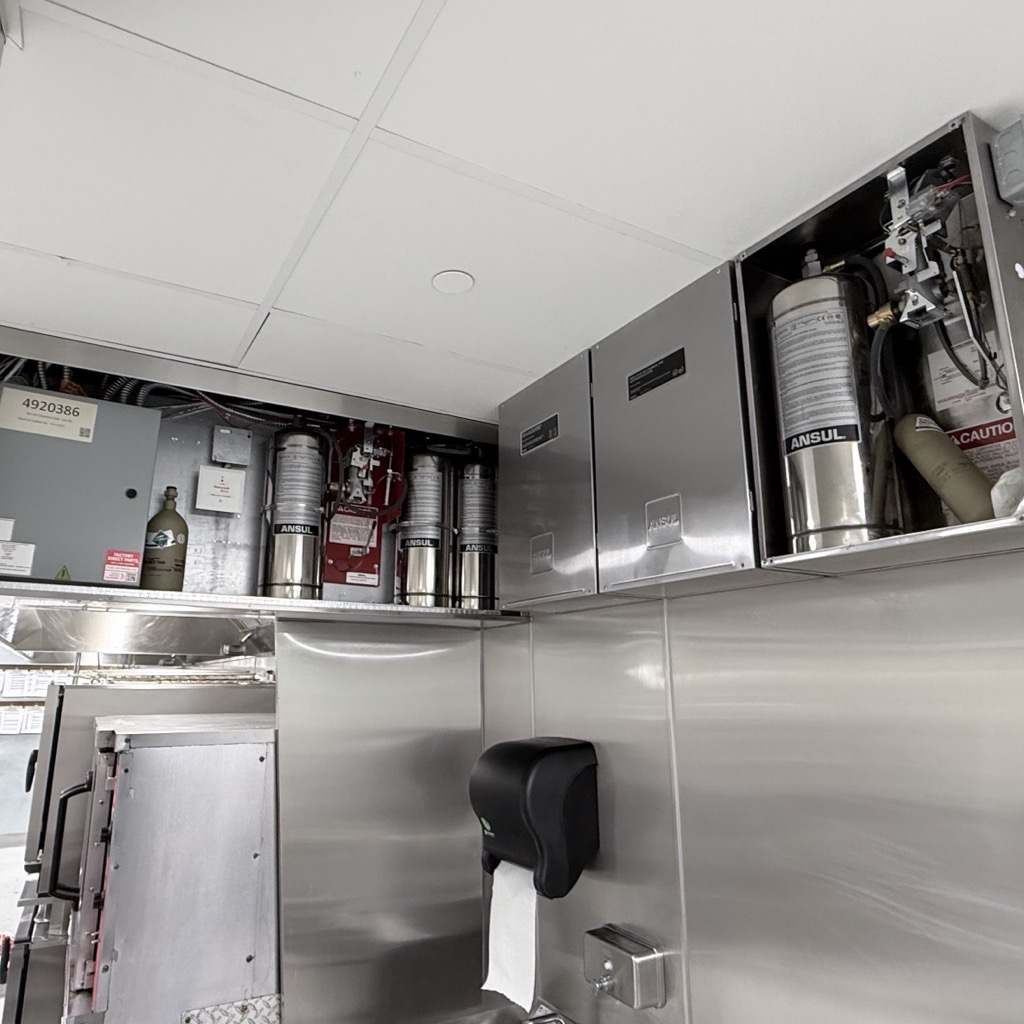
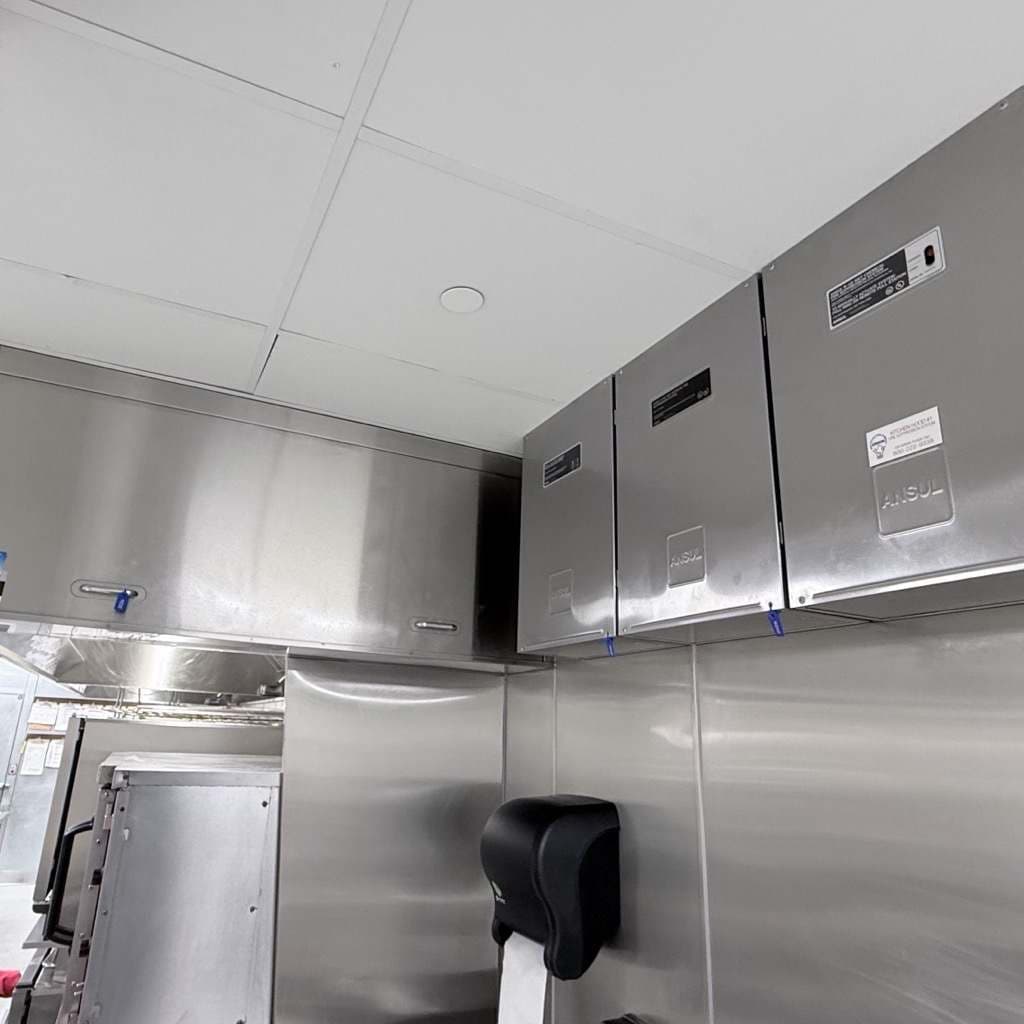
A semi-annual fire suppression inspection is more than a visual check. It is a functional test of every component the system relies on in an emergency. A licensed C-16 technician inspects all nozzles for clogging or misalignment, checks piping for corrosion or damage, verifies that fusible links are intact and properly positioned, and tests both the manual pull station and the automatic detection system. The wet chemical agent charge in the suppression tank is measured and topped off if needed. Gas shutoff mechanisms are tested to confirm they activate on system discharge. Fusible links are physically replaced, not just inspected, at every semi-annual visit per NFPA 96 requirements. The inspection concludes with a compliance tag applied to the system showing the date and technician, and documentation filed with the local authority having jurisdiction. That tag must be visible in the kitchen at all times.
What is a fusible link and why does it need replacing every 6 months?
Fusible links are small metal components positioned in the hood and duct system that are designed to melt at a specific temperature, releasing the tension that holds the fire suppression system in standby and triggering chemical discharge. They are the mechanical trigger for the entire system. The problem is environmental: commercial kitchens produce continuous grease vapor that coats the links, creating an insulating layer that can prevent the link from melting at its rated temperature, meaning the suppression system may not activate when it needs to. In some cases, the coating causes the link to stick in place entirely. NFPA 96 addresses this by requiring physical replacement at every semi-annual inspection: not a wipe-down, not a visual check, but actual replacement of the component. This is one reason the semi-annual inspection cannot be abbreviated or deferred: the fusible link replacement is a safety reset, not a formality.
What is UL 300 compliance and does my system need it?
UL 300 is the Underwriters Laboratories standard for wet chemical fire suppression systems in commercial kitchens, and it represents a significant technical improvement over the dry chemical systems it replaced. Modern commercial cooking relies heavily on vegetable oils (canola, soybean, corn) which have substantially higher flash points than the animal fats that older systems were engineered to suppress. Dry chemical systems and early wet chemical systems are not effective against these oils at the temperatures they reach in commercial fryers. UL 300 systems use a wet chemical agent specifically formulated for modern cooking oils. California requires UL 300-listed systems, and the 2025 updates to NFPA 96 eliminated grandfathering provisions for older non-compliant systems. If your kitchen has a suppression system installed before approximately 1994, or if you cannot confirm it is UL 300 listed, have a licensed C-16 contractor assess it. Operating with a non-compliant system voids your insurance coverage and exposes you to fire code liability.
What happens after a fire suppression system discharges?
A fire suppression discharge, whether triggered by an actual fire or an accidental activation, puts the kitchen out of service immediately and unconditionally. No cooking can resume until a licensed C-16 contractor has inspected the system, recharged the suppression agent, replaced all fusible links, and issued a certification. The chemical discharged by Ansul and similar systems is a wet potassium-based compound that coats all surfaces it contacts, including cooking equipment and food-contact surfaces. A full kitchen cleaning is required before service can resume. If the discharge was preceded by a grease fire, the ductwork must also be professionally cleaned and inspected before the kitchen reopens. The practical timeline from discharge to reopening is rarely less than four hours, and commonly a full day or more depending on the extent of discharge and whether duct cleaning is required. Your insurance carrier must be notified of any discharge regardless of whether property damage occurred, as failure to report can complicate future claims.