Hood system problems rarely announce themselves clearly. A kitchen filling with smoke during service, a filter that looks fine but isn't pulling air, a cleaning tag that expired two months ago without anyone noticing — these are the warning signs that operators miss until an inspector or a fire makes them impossible to ignore.
This guide covers the problems that appear most often in commercial hood systems, what each one indicates about the underlying condition, and at what point the problem requires a licensed technician rather than an in-house fix.
Reduced airflow and smoke capture
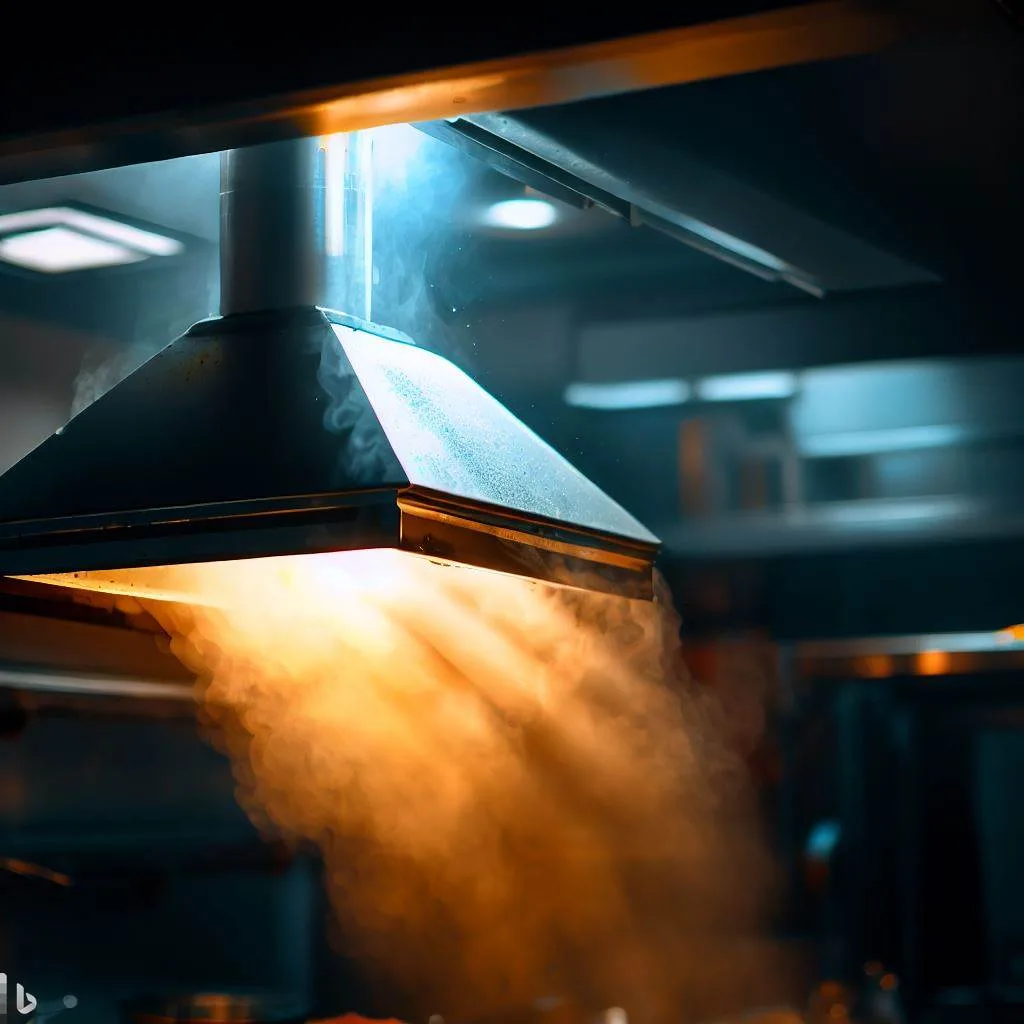
Reduced airflow is the most common hood problem and the one with the most causes. If your kitchen is filling with smoke during normal service, or cooking odors are lingering in the dining room, the hood system is not capturing effectively.
Work through these in order before calling a technician:
- Filter loading — grease-saturated filters are the most frequent cause of reduced airflow. A filter that's visibly coated with solidified grease has significantly higher resistance to airflow than a clean one. Check filters first. If they're saturated, exchange them before diagnosing further.
- Filter misalignment — a filter that's not seated correctly in the rack allows air to bypass the filter entirely, reducing capture efficiency without any visible indication on the filter itself. Check that all filters are seated flush with no gaps.
- Grease buildup in the plenum — heavy grease accumulation in the plenum above the filters restricts the path from filters to duct. This is not something staff can address — it requires professional cleaning.
- Exhaust fan issues — a fan running at reduced speed, with a worn belt, or with grease buildup on the blades produces less suction. If filters are clean and seated correctly but airflow is still reduced, the fan is the next thing to check. Fan issues require a technician.
If your hood is showing weak suction or not pulling air after filters have been checked and exchanged, the problem is upstream of the filters and needs professional diagnosis.
Smoke filling the kitchen during service
A kitchen filling with smoke during normal service is an operational problem and a compliance signal simultaneously. Under NFPA 96, a hood system that is not effectively capturing cooking vapors is not meeting its fire protection function — which is the basis for the entire cleaning and maintenance requirement.
Immediate steps: check and exchange filters, verify fan is running, check that makeup air supply is functioning. A hood system requires balanced airflow — if the makeup air supply is restricted or blocked, the hood cannot exhaust effectively regardless of fan speed.
If smoke capture doesn't improve after these checks, don't continue operating and waiting. A kitchen that's filling with smoke during service is operating with a degraded fire protection system. Call your hood cleaning contractor for an emergency inspection.
Grease dripping from the hood or filters
Grease dripping from hood surfaces or filter frames during service indicates one of two conditions: filters are overdue for exchange and have exceeded their holding capacity, or the grease collection cups or drip trays are full and overflowing.
Check grease collection cups first — these should be checked and emptied as part of daily kitchen maintenance, not just at cleaning intervals. A full grease cup that overflows onto cooking surfaces or equipment is both a fire hazard and a health inspection citation waiting to happen.
If grease is dripping from filter frames rather than collection points, the filters need immediate exchange. Filters in this condition are past the point of routine maintenance — they're a fire risk during service.
If you're seeing grease not draining properly from the hood, check that drip channels and collection paths aren't blocked with solidified grease before assuming a structural problem.
Unusual noises from the exhaust fan
The exhaust fan runs continuously during service. Unusual noises — grinding, rattling, vibration — indicate a mechanical problem that gets worse with continued operation, not better.
- Rattling or vibration — often a loose component: fan housing panel, access door, or mounting hardware. Check accessible panels and fasteners. If the source isn't immediately obvious, don't continue operating until it's identified.
- Grinding — bearing wear in the fan motor. This requires a technician. Continuing to run a fan with worn bearings risks complete failure during service.
- Reduced speed with normal sound — belt-driven fans can lose tension over time, reducing fan speed without producing obvious noise. If airflow seems reduced but the fan sounds normal, belt tension or condition may be the issue.
If your hood fan is making loud or unusual noise, log when it started and under what conditions before calling a technician — that information helps diagnose the cause faster.
Expired or missing cleaning tag
An expired cleaning tag is a compliance problem, not just a maintenance reminder. In LA County, the LAFD checks the certification tag as the primary evidence of hood cleaning compliance during an inspection. An expired tag — even if the system was recently cleaned by an unlicensed contractor — is a citable violation.
What to check:
- Tag posted visibly on the hood — date of last service and contractor name
- Date within the required cleaning interval for your kitchen category (monthly, quarterly, semi-annual, or annual under NFPA 96 Table 11.4)
- Contractor holds a valid C-61/D-28 license — LAFD will not accept documentation from unlicensed contractors
If your cleaning tag is expired or missing, schedule service immediately — don't wait for the next routine cleaning cycle. The LAFD can issue a citation during any routine inspection or complaint-driven visit, regardless of when the last health inspection occurred.
Strange smells from the hood
A persistent burning or rancid smell coming from the hood system during or after service usually indicates grease accumulation in the ductwork — beyond what's visible at the filter level. Grease in horizontal duct runs pools and accumulates faster than grease in vertical sections, and it's not visible during routine filter checks.
This is not a problem that filter exchange resolves. If the smell persists after filters have been exchanged and the plenum has been wiped down, the ductwork needs professional cleaning. A strange smell coming from the hood that doesn't clear after routine maintenance is a signal that the professional cleaning interval needs to move up.
When to call a technician vs handle in-house
In-house staff can address: filter exchange, grease collection cup emptying, exterior surface cleaning, and verifying that the fan is running and filters are properly seated.
Call a licensed technician for: reduced airflow that persists after filter exchange, any fan noise indicating mechanical wear, grease dripping that isn't resolved by filter exchange and collection cup emptying, ductwork odors that persist after routine cleaning, and any situation where the system is not capturing cooking vapors effectively during service.
For the full compliance framework — cleaning frequency requirements under NFPA 96, what a compliant service visit covers, and documentation requirements for LAFD inspections — the hood maintenance compliance guide covers the regulatory detail. For the filter-specific maintenance schedule, the hood filter cleaning guide covers in-house tasks and when professional exchange is needed.
Frequently asked questions
How often should I clean my restaurant hood filters?
Hood filters should be cleaned regularly to prevent grease accumulation, which impairs ventilation and increases fire hazards. The frequency depends on your cooking volume, but most restaurants need cleaning weekly to monthly for optimal performance and safety compliance.
What happens if restaurant hood filters aren't maintained properly?
Neglected hood filters allow grease and smoke to bypass filtration, leading to ductwork buildup, fire hazards, reduced airflow, and lingering odors. This also disrupts kitchen temperature and humidity balance, affecting cooking efficiency and staff comfort while creating health and safety risks.
Can a clogged hood filter affect my kitchen's air quality?
Yes, clogged filters significantly reduce airflow and allow contaminants like grease particles and smoke to circulate in your kitchen. This creates an unpleasant working environment, potential health issues for staff and customers, and can compromise food safety and hygiene standards.
How do grease-clogged hood filters create a fire hazard in restaurants?
When grease accumulates on filters and in ductwork due to poor maintenance, it becomes highly flammable. The buildup increases the risk of fire spreading quickly through your ventilation system, making regular filter cleaning and maintenance critical for kitchen safety.
Ready when you are
Running into issues with your kitchen
Our team coordinates vetted technicians across Southern California, same day for emergencies.