
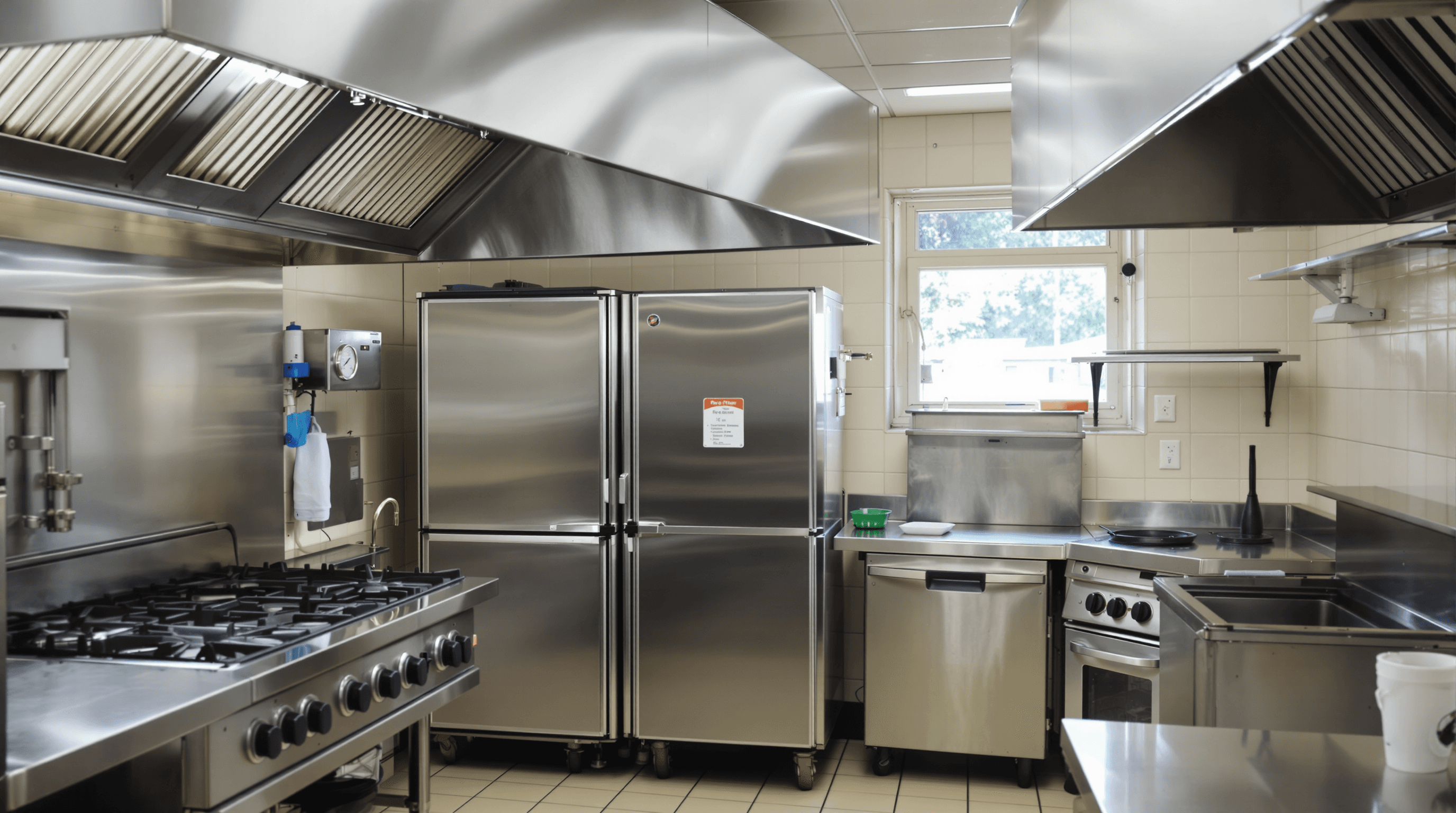
A line cook walks up: "the ice machine is making a noise." A prep tells you the walk-in feels warm. A server says the dishwasher rinse isn't getting glasses spot-free anymore. None of these are emergencies yet. All of them are about to be unless somebody runs three minutes of observation and decides what they're looking at.
This page is an index, not a diagnostic manual. It lists the most common symptoms by equipment class, with the safe operator checks for each, and links to deeper troubleshooting pages where they exist. The framing matters: safe operator checks are observations and minimal interventions that a non-technician can do in under five minutes without tools, without opening sealed panels, and without doing anything that could make the situation worse. They are not diagnosis. Diagnosis is technician work, and trying to do technician work without the training, the meters, the parts, or the trade license is how operators get hurt and how units get worse.
The three rules to hold while running any of the checks below: don't open sealed panels, don't touch refrigerant lines or gas lines, and don't keep resetting things that keep tripping. A tripped breaker reset once is diagnostic; a tripped breaker reset three times is a fire risk. A pilot light that won't light after two strikes is gas-valve territory, not stubbornness.
Stop and call if any of these apply:
- You smell gas. Shut off the gas at the line if you can safely reach it, ventilate, evacuate if necessary, call the gas utility and your fire-suppression vendor.
- The fire-suppression system has discharged (or shows signs of having discharged: chemical residue, deformed nozzles, broken seal). The kitchen is closed until the system is recharged and re-certified.
- You see active arcing, smoke, or scorch marks on an electrical panel, outlet, or piece of equipment. Shut off power at the breaker, call an electrician, do not investigate further.
- Water is actively flooding from a piece of equipment or from a ceiling penetration above the kitchen.
- TCS food is above 41°F with a refrigeration unit climbing. Start the timeline documentation now, plan product movement, and call dispatch immediately.
Walk-in cooler & refrigeration
Refrigeration symptoms are the most expensive class to ignore. Compressor replacement is a four-to-five-figure event before product loss is counted, and most compressor failures have a paper trail (door gasket creep, evaporator fan noise, ice on coils, slow temperature climb) before the failure. Catching one of those signals two weeks early changes the cost class entirely.
- Walk-in cooler not cooling but compressor running. Air movement at the evaporator fan is the first check; coil condition is the second. Safe operator checks →
- Walk-in cooler evaporator fan not running. The fan is what moves cold air across the coils and out into the box. If it's not running, the box warms even when the compressor and coils are working. Safe operator checks →
- Walk-in cooler heavy ice on coils (frost-over). A defrost-cycle failure or a humid-air leak. Visually obvious: heavy frost or ice on the evaporator coils. Safe operator checks →
- Walk-in cooler door not sealing. A failed gasket or a strike plate problem. Test by closing the door on a dollar bill and pulling; it should hold. Safe operator checks →
- Walk-in cooler thermostat oscillating. The unit cycles too fast: short bursts of cooling instead of normal long cycles. Often a controller or sensor problem. Safe operator checks →
- Walk-in cooler water on the floor under the unit. A drain line clog, a defrost-pan overflow, or a refrigerant-side issue. Smell and color of the water are diagnostic. Safe operator checks →
- Reach-in cooler or prep table not holding temperature. Same observation pattern as the walk-in, scaled down. Door gasket, condenser coil dust loading, and fan operation are the three checks.
- Freezer cycling but ice cream is soft. Almost always a door gasket or a defrost-cycle issue. Heavy ice buildup inside is the visual tell.
Ice machines
Ice machines are mass-water-mass-refrigeration systems with a lot of failure surface. Five common symptom families cover most of what kitchens encounter: slow production, cloudy ice, cycling without dropping, mechanical noise, and bin-sensor confusion. Hoshizaki, Manitowoc, Scotsman, and Ice-O-Matic all show these patterns the same way across brand classes.
- Ice machine producing slow / production has dropped. Most common cause: a fouled condenser (dust-loaded, ambient too hot, or water-cooled with scale). Check the condenser intake first. Hoshizaki KM-series, Manitowoc Indigo, Scotsman Prodigy, and Ice-O-Matic all show this symptom the same way.
- Ice machine making cloudy or off-tasting ice. Water-filtration issue or an internal cleaning-cycle issue. Replace the inline water filter, confirm the cleaning cycle ran (most machines have a service indicator), and observe the next 24 hours.
- Ice machine cycling but no ice dropping. The evaporator plate isn't releasing. Could be a thermostat, a harvest-cycle valve, or a freeze-up. Note whether the machine is running through full cycles (water on, freeze, harvest attempt) or stuck somewhere; that observation routes the dispatch.
- Ice machine making clunking or grinding noise. Mechanical: bin agitator, harvest motor, water pump, or fan. Note where the sound is coming from (top of the unit, bin side, condenser side) and whether it's continuous, cyclical, or intermittent.
- Ice machine bin full but bin sensor saying empty (or vice versa). Bin-sensor failure, sensor needs cleaning, or an alignment problem. Generally not an emergency unless the machine has stopped producing.
Ranges, char-broilers, fryers
Hot-line gas equipment shares failure modes across brand classes (Vulcan, Wolf, Garland, Pitco, Frymaster, Bakers Pride). Four common symptom families: pilot-light failure, single-burner failure, fryer-vat heating issues, and uneven char-broiler heat. Most causes are inexpensive parts (igniter, thermocouple, gas valve) if caught early.
- Burner pilot light won't stay lit. Standing-pilot units: a worn thermocouple is the usual cause; new flame on a stale thermocouple won't generate enough EMF to hold the gas valve open. Spark-ignition units: an igniter or gas-valve issue. Either way, two strikes and stop. Don't keep clicking.
- Range burner won't light on one side. Usually a clogged orifice, a fouled spark electrode, or a gas-valve problem affecting that burner only. The other burners working confirms gas supply.
- Fryer not heating, or one vat heating slower than the other. The high-limit thermostat (the safety) may have tripped; check for a reset button on the back. If it's tripped repeatedly, the operational thermostat or the heating element is the issue.
- Char-broiler uneven heat or cold spots. Burner orifice clogging (food debris baked on, common after high-volume service) or burner valve drift. A visual inspection of the burner row when cold tells you a lot.
Dishwashers
Commercial dishwashers (Hobart, Champion, Jackson) sit in a humidity- and temperature-cycling envelope that wears components fast. Four common symptom families: insufficient rinse temperature, drainage failure, spotty plates from arm clogs, and door-gasket leaks. Most are operator-checkable; the rinse-temperature one is the compliance-relevant symptom because health code requires 180°F for high-temp sanitizing.
- Dishwasher rinse temperature insufficient. Required: 180°F for high-temp sanitizing units, lower for chemical-sanitizing units (per local health code). Check the rinse-cycle temperature gauge, check the booster-heater status, check the water inlet temperature.
- Dishwasher not draining between cycles. Usually a clogged drain screen, a clogged drain line, or a drain pump issue. Easy fixes if the screen is the problem; more involved if it's the pump.
- Dishwasher cycle running but plates coming out wet or spotty. Wash arm clog or rinse arm clog. Remove the arm, flush, and reinstall. If that doesn't resolve, it's water hardness or a chemical-dispenser issue.
- Dishwasher leaking from the door. Door gasket failure or door latch alignment problem. Visual inspection of the gasket; replace if torn or hardened.
Hood ventilation
Hood-system problems are compliance-adjacent: many are NFPA 96 issues, not just operational. Three common symptom families: bearing-failure noise from the exhaust fan (a failed bearing during service is a closure event), hood not pulling smoke (filter loading or stuck damper), and pressure imbalance from a misaligned make-up air. Any hood symptom should be cross-referenced against the last cleaning cadence.
- Hood fan loud rattling or grinding noise. Almost always a bearing failure starting: the bearings in the exhaust-fan motor are wearing. Note the time at which the noise appeared and whether it's getting worse session-over-session. A failed bearing during service is a closure event.
- Hood not pulling smoke or steam off the line. Either the fan isn't running, the dampers are stuck, or the filters are heavily loaded. Check filter condition first: heavy grease loading restricts airflow and is a fire-load risk.
- Make-up air or HVAC creating pressure imbalance in the kitchen. Doors slamming, hard to open, drafts at the line, smoke leaking out of the hood instead of being pulled up. Hood operation and make-up air need to balance; one being off throws the other.
For any hood-system symptom, also note: when was the last NFPA 96 cleaning, what's on the most recent cleaning report, and what's the fire-suppression inspection due-date.
Hot-line equipment (steamers, ovens, holding cabinets)
Steamers, convection ovens, and holding cabinets share a few failure modes: scale buildup on heating surfaces (hard-water Southern California submarkets descale heavily), thermostat or gasket failures, and blower-fan issues. Most are observable with a thermometer and a visual check; the descale ones are calendar-driven and preventable with a proper PM cadence.
- Steamer not generating steam (or generating but pressure low). Water level switch, heating element, or scale buildup. Steamers in hard-water Southern California submarkets descale on a heavy cadence; missing a descale is a common-failure mode.
- Convection oven not maintaining temperature. Heating element, thermostat, blower-fan motor, or door-seal gasket. The gauge reading vs. the thermometer reading at the rack is the test.
- Holding cabinet at wrong temperature. Almost always a thermostat, a door-seal gasket, or a heating-element issue. Easy diagnostic with a thermometer; product hold limits are diagnostic too.
The point of safe operator checks isn't to fix the equipment. It's to give the technician a richer picture than "the walk-in is broken", and to decide whether the situation is an emergency or a same-day call.
How to use these symptom pages when calling dispatch
Most dispatchers ask the same three questions, in this order: which unit, what's the symptom, and what's the trajectory. The safe operator checks are designed to give you a short, specific answer to all three:
Which unit: location, equipment class, brand and model if available (manufacturer plate is typically on the back, near the bottom, or inside the door). Asset ID if your operation tracks them.
What's the symptom: the specific observation, not the consequence. "The compressor is silent and the evap fan isn't running" instead of "the walk-in is broken." The observation routes the dispatch: a silent compressor is a different dispatch from a running compressor with frozen coils.
What's the trajectory: stable, climbing slowly, climbing fast. Two thermometer readings ten minutes apart settles the question. The trajectory determines whether you need emergency dispatch right now or a same-day call later in the shift.
The fourth thing dispatch will want to know, what you've already tried, separates a competent operator from a guessing operator. "I've reset the breaker once (held), confirmed the door gasket is intact, and verified the evaporator fan is not running" is a much faster dispatch than "I don't know, it's just not working."
In the next 20 minutes, no pitch attached
If you're mid-symptom right now: find the equipment class above, find the symptom that matches what you're observing, run the safe checks listed there, and call dispatch with the three answers (which unit, what's the symptom, what's the trajectory) plus what you've already tried. The whole conversation should take three minutes once you have the observations down.
If you're not mid-symptom but want to put this in front of the kitchen team before the next one: print this page, post it inside the office or near the line phone, and walk through the stop-and-call triggers with the GM and the kitchen manager. Most operational debt in commercial kitchens accumulates between the moment a symptom first shows up and the moment somebody decides to do something about it. The kitchen that closes that gap saves money it doesn't see in any single event.
For Southern California operators using Boh's emergency dispatch, the same observations route the call. Boh, which manages back-of-house repairs, maintenance, and compliance for Southern California restaurants, routes those calls to vetted licensed trades. The Maintenance Coverage page covers preventive scope for the equipment classes above; the Services page lists trades and published SLA structure.
Frequently asked questions
What's the difference between safe operator checks and diagnosis?
Safe operator checks are observations and minimal interventions the kitchen team can do in under five minutes without tools, without opening sealed panels, and without doing anything that could make the situation worse. Diagnosis is figuring out the root cause, which often requires a licensed technician with the right meters, parts, and equipment training. The checks below help the operator do three things: rule out simple causes (a tripped breaker, a propped-open door, a clogged drain), document what's happening in a way the vendor's dispatcher can route the call faster, and decide whether the situation is an emergency or a same-day call. Anything past those three is technician work.
How do I know when to stop checking and call dispatch?
Three triggers. First, product is at risk: refrigeration temperature climbing with TCS food inside, hot line out mid-service, fire-suppression discharge, gas smell. Second, the safe checks have all ruled out a simple cause and the symptom persists: power is on, door is sealed, no visible obstruction, and the unit still isn't doing what it's supposed to do. Third, you don't know what you're looking at: anything inside an opened panel, anything involving gas lines, anything involving refrigerant lines, anything involving electrical components past the breaker. If any of the three apply, stop checking and call. The cost of a dispatch is much less than the cost of an injury or a one-decision-made-things-worse situation.
Do I need to be at the equipment to use these symptom checks?
Yes for most of them. The checks are observations: what you see, hear, and feel at the equipment. The point of the checks is to give the vendor's dispatcher a richer picture than 'the walk-in is broken.' A description that includes the trajectory ('temperature has climbed 3°F in the last 10 minutes'), the audible state ('compressor silent' or 'compressor running but no air movement at the evaporator fan'), and the visual state ('heavy frost on the coils' or 'water on the floor under the unit') gets a faster dispatch and a more useful parts loadout than a vague report.
Which commercial kitchen symptoms are the most expensive to ignore?
Refrigeration symptoms, by a wide margin. A walk-in compressor running but not cooling, an evaporator fan not running, ice forming heavily on the coils, or door gasket failures all trend toward total compressor failure if ignored, and compressor replacement on a commercial walk-in is a four-to-five-figure event before product loss is counted. Ice machine cloudy ice and slow production trend toward sealed-system failures. Hood ventilation rattling or unusual vibration trends toward bearing failure, and a hood-fan failure during service is a compliance event. Range and char-broiler pilot issues, by contrast, are usually inexpensive to address if caught early: most are igniter, thermocouple, or gas-valve problems with reasonable parts cost.
Should I keep a symptom log for recurring equipment problems?
Yes, for any unit that has cycled through more than two service visits in a 90-day window. The log doesn't need to be sophisticated; a shared note with date, symptom description, what was done, parts replaced, and whether the symptom recurred is enough. Most chronic equipment problems have a paper trail that becomes obvious once the trail exists. Sharing the log with the next technician on dispatch cuts diagnostic time by giving them the failure history without an interview. If the unit accumulates more than three visits without a stable fix, the conversation worth having is replacement-versus-repair, not another service call.
Ready when you are
Running into issues with your kitchen
Our team coordinates vetted technicians across Southern California, same day for emergencies.