Custom quote service

Commercial kitchen cleaning.
Nightly through quarterly, quoted in 24 hours.

Every kitchen has two cleaning needs: the nightly service that keeps the full facility running, and the periodic deep clean that clears accumulated grease from zones staff can’t reach nightly. Boh coordinates both — same documentation, same BohPro network, one quote.

Pricing
Fixed quote
Cadence
Nightly · Monthly · Quarterly
Service area
Southern California
Read before you book

What inspectors look for

Daily baseline
Nightly cleaning is not optional — it’s the baseline
California Retail Food Code requires food facilities to be maintained clean and sanitary at all times. That obligation doesn’t pause between deep cleans. Nightly cleaning — covering the kitchen line, restrooms, dining room, bar, and patio — is what keeps a kitchen compliant between periodic deep cleans, not a substitute for them.
Code escalation
Repeat grease findings flip to critical
A grease build-up cited once is non-critical. The same finding on the next inspection cycle reclassifies as critical. Critical violations carry higher re-inspection scrutiny and can trigger conditional permits or closure orders if left unresolved. The fix is mechanical: clear the behind-equipment and floor-drain zones on a monthly cadence.
Live-fire kitchens
Charcoal, rotisserie, and flatbread output
Charcoal grilling, shawarma rotisseries, and flatbread ovens generate grease-laden exhaust and rendered fat at rates well above a typical café or fast-casual kitchen. Stretching past monthly is rarely viable for these concepts — grease migrates into the wall-and-baseboard zone in weeks, not quarters.
How it works
01
Request a quote< 2 min
Tell us your kitchen size, cooking method, and desired cadence — nightly, weekly, monthly, or quarterly. Boh sends a fixed-price quote within 24 hours. Deep-clean first visits are typically higher; recurring visits run on a flat baseline.
02
BohPro scheduledThis week
Once approved, a credentialed BohPro from our cleaning network is matched and scheduled. Most first-time customers are serviced within 5–7 days of quote approval; recurring customers run on their fixed cadence.
03
Done + documentedOn completion
Area-by-area cleaning log, service record, and (where needed) a corrective action summary uploaded to your account before the BohPro leaves the site. Ready for your next health inspection.
What’s included

Everything a BohPro does on-site

Nightly cleaningFull facility — kitchen, restrooms, dining room, bar, patio
Kitchen
Floors swept, scrubbed, and degreased
Drains cleaned and bleached
Stainless steel walls and surfaces around equipment degreased
Hoods and reachable filter areas degreased and cleaned
Ovens, stove tops, and burners degreased and cleaned
Grills and fryers (when empty) degreased and cleaned
Under movable equipment degreased and cleared
Restrooms
Toilets, sinks, and urinals cleaned and sanitized
Trash containers emptied and relined
Mirrors and chrome hardware cleaned and polished
Floors swept, mopped, and machine scrubbed
Partitions, doors, and walls spot cleaned and wiped
Dining room
Tables and chairs wiped down after service
Floors swept and mopped
Bar and prep areas
Floors swept, mopped, and degreased
Mats cleaned and degreased
Baseboards damp wiped
Patio
Floors swept, scrubbed, and mopped
Throughout
Walls and fixtures dusted and cleaned
Air vents and high surfaces dusted
Periodic deep clean (monthly or quarterly)Accumulated grease and equipment zones nightly cleaning can’t address
Behind and under all cooking equipment (rotisseries, grills, flat-tops, fryers)
Under and around fixed equipment not moved nightly
Walk-in cooler floors and floor drains
Grease-saturated walls and baseboards
Grease collection channels (excluding hood interiors — covered under hood cleaning)
Corrective action documented when conditions exceed routine scope
Delivered after every visit

Proof the work was done, filed to your account
Service record
Service report
Zones cleaned, technician, corrective actions noted
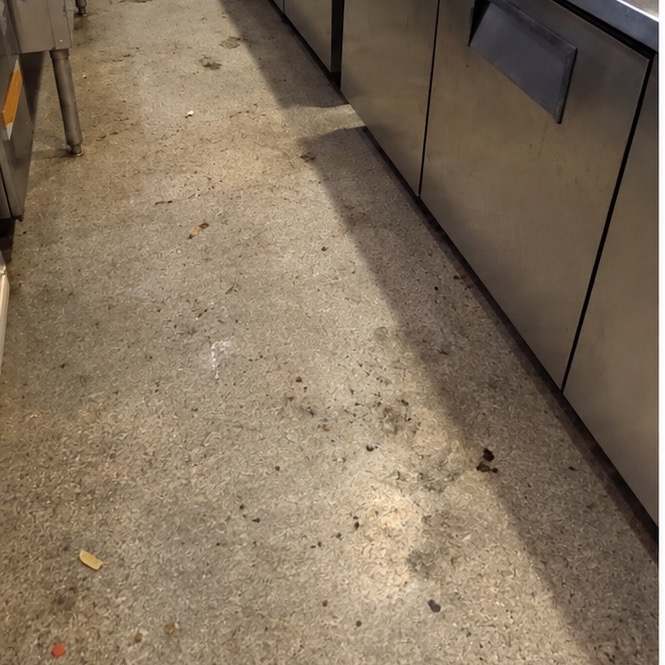
Photo log
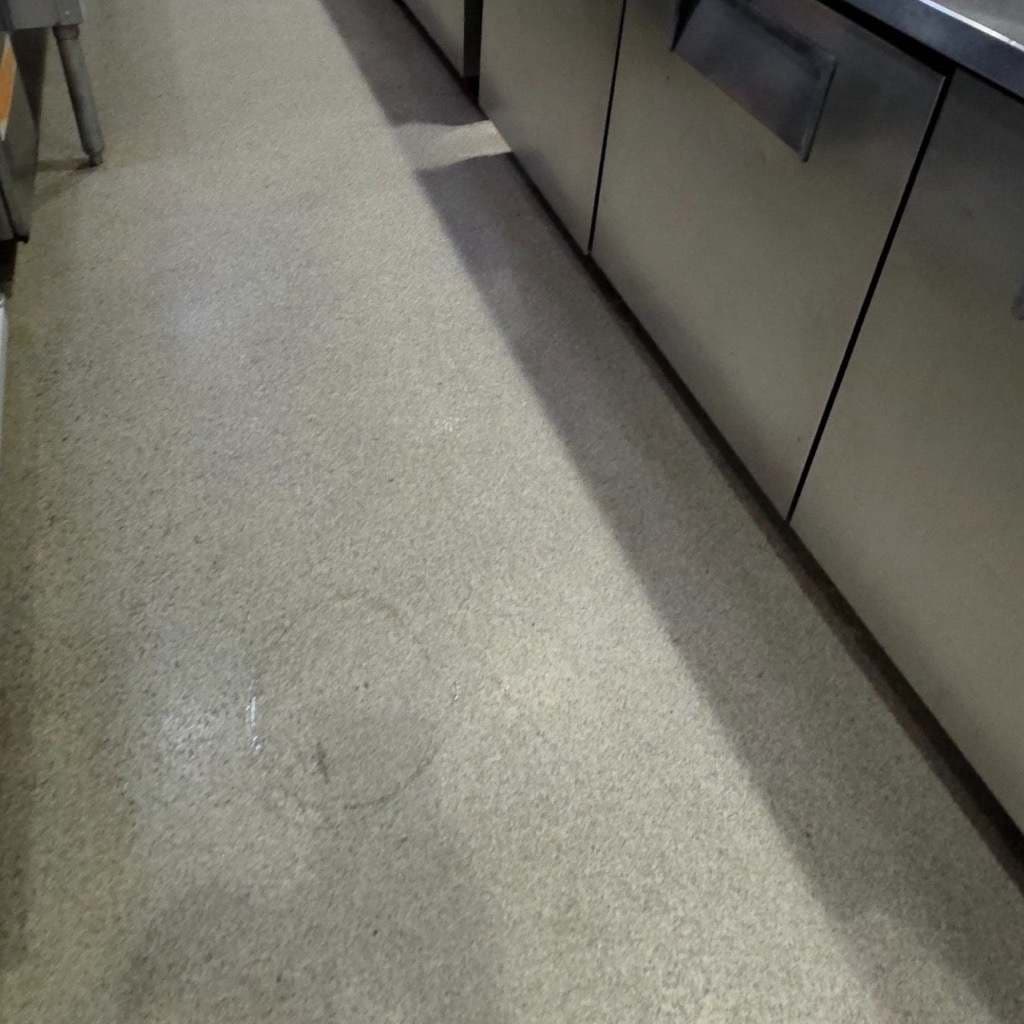
Before & after
Behind-equipment, drains, walk-in floors
BEFORE
AFTER
Trusted by restaurants across Southern California
Citrin
Vespertine
Ysabel
Laurel Hardware
Taco Bell
Wingstop
FAQ

Common questions

What does commercial cleaning include for a restaurant kitchen?

Commercial kitchen cleaning is the professional deep cleaning of all kitchen surfaces — including the areas that daily staff cleaning consistently misses. Industrial degreasers and commercial-grade equipment are used to clean the full wall surface from floor to ceiling, including areas above the cooking line where grease vapor settles. Behind and under all equipment is cleaned — inspectors routinely check these areas and cite grease accumulation there as a violation. Floor drains are cleaned and deodorized. Walk-in cooler and freezer interiors are cleaned including shelving, walls, and floor corners. The hood canopy exterior and grease filters are cleaned. Dry storage areas, shelving, and the spaces behind stored goods are addressed. The difference between commercial cleaning and daily staff cleaning is not just thoroughness — it is the use of professional-grade chemicals and equipment that actually cut through polymerized grease rather than redistributing it, and the focus on areas that daily protocols do not reach.

How often should professional commercial cleaning be performed?

Monthly professional deep cleaning is the standard for full-service restaurants in Southern California, but the right frequency depends on kitchen volume and cooking type. High-volume operations running high-grease menus — heavy frying, charbroiling, wok cooking — accumulate grease on surfaces, walls, and ceiling tiles fast enough that monthly cleaning leaves visible buildup between visits; biweekly service is appropriate for these kitchens. The practical test is straightforward: if a manager walking the kitchen between professional cleanings is finding grease accumulation on wall surfaces, ceiling tiles, or floors behind equipment that a mop does not address, the frequency needs to increase. LA County inspectors check specifically behind and under equipment and in corners that staff cleaning rarely reaches — grease accumulation in those areas is a citable violation regardless of how clean the visible surfaces look.

What is the difference between commercial cleaning and hood cleaning?

Hood cleaning and commercial cleaning are distinct services that address different compliance obligations and are performed by different types of contractors. Hood cleaning is a fire code service: it covers the interior of the exhaust system — the hood canopy, all ductwork, the exhaust fan, and rooftop containment — and must be performed by a certified contractor to NFPA 96 standards. Its purpose is fire prevention, and its documentation (the cleaning certificate) is a fire code compliance record. Commercial cleaning is a general sanitation service covering all kitchen surfaces, equipment exteriors, floors, walls, drains, walk-ins, and storage areas — it addresses the health code requirement for a clean and sanitary facility. Operators sometimes believe a thorough hood cleaning satisfies their cleaning obligations; it does not. Conversely, commercial cleaning does not touch the interior duct system and does not satisfy the NFPA 96 requirement. Both are required on their own schedules, with their own documentation.