
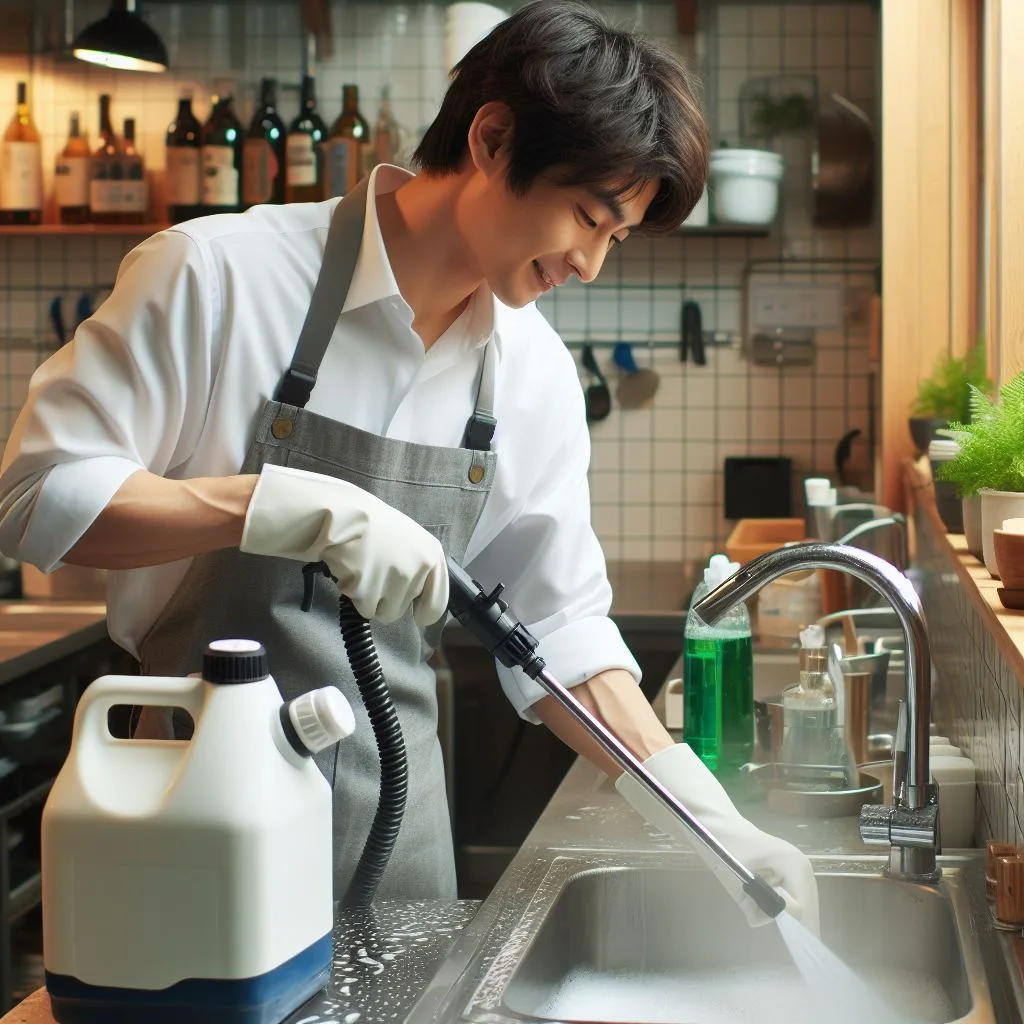
Pressure washing occupies an unusual position in restaurant cleaning — it's not mandated by CalCode the way hood cleaning or grease trap maintenance is, but the surfaces it addresses show up directly on health inspection scores. Greasy floors cited in nearly one in four LA County inspections, pest entry points linked to grease buildup around back doors and dumpster areas, non-food contact surfaces cited in 6,535 inspections — these are the categories pressure washing prevents.
This guide covers where pressure washing belongs in a restaurant cleaning program, how often to schedule it, and what operators need to know about safe and compliant use in a commercial kitchen environment.
Where pressure washing fits in LA County compliance
Health inspectors in LA County evaluate floor surfaces, non-food contact surfaces, and the area around waste receptacles as part of the routine inspection. These aren't high-drama violations — they average 1.0 point each — but they accumulate. Two floor citations and one equipment exterior citation is 3 points deducted before the inspector has looked at a single piece of cooking equipment.
Pressure washing addresses the accumulation problem. Mopping removes surface-level soiling; it doesn't remove grease that has bonded to grout lines, accumulated in floor drain surrounds, or built up on the concrete pad around a dumpster enclosure. That embedded buildup is what inspectors find — and what routine daily cleaning can't reach.
Pressure washing also directly reduces pest pressure. Grease and food waste accumulation around back doors, dumpster areas, and loading docks is the primary attractant for rodents and cockroaches in exterior zones. A clean perimeter is structurally harder for pests to colonize than one with ongoing organic buildup.
Where to pressure wash — and where not to
Not every surface in a commercial kitchen is appropriate for pressure washing. High-pressure water applied to the wrong surface damages equipment, forces water into electrical components, and can spread contamination rather than remove it.
Appropriate for pressure washing:
- Kitchen floors — tile, concrete, and quarry tile floors with grout lines accumulate grease in ways that mopping doesn't address. Pressure washing with hot water and degreaser removes embedded grease and restores traction on surfaces that become slip hazards when grease-saturated
- Floor drains and drain surrounds — drain channels and the concrete around floor drains accumulate grease and organic buildup that creates odors and attracts pests. Pressure washing clears buildup that manual cleaning can't reach in drain channels
- Dumpster enclosures and loading docks — the most important exterior zones for pest prevention. Grease, food waste, and liquid accumulation in these areas creates the conditions that attract rodents and cockroaches. Monthly pressure washing of dumpster pads is the standard for high-volume LA County restaurants
- Exterior walkways, patios, and service entrances — grease tracked from kitchen to exterior, cooking odors absorbed into concrete, and organic buildup on outdoor dining surfaces. Quarterly pressure washing maintains these areas
- Grease collection areas and hood exhaust termination zones — grease that accumulates on exterior walls below hood exhaust outlets requires pressure washing; it can't be addressed with manual cleaning
Not appropriate for pressure washing:
- Food contact surfaces — pressure washing disperses contaminants rather than eliminating them on surfaces that contact food
- Electrical panels, outlets, and wiring — water intrusion risk
- Equipment interiors — dishwashers, ovens, refrigeration units
- Walls in food preparation areas — pressure can drive water and contaminants into wall cavities and behind equipment
How often to schedule pressure washing
Frequency depends on cooking volume, cuisine type, and the specific zone being cleaned.
- Kitchen floors — weekly to monthly depending on volume. High-volume kitchens with fryers, charbroilers, or wok stations generate grease accumulation that requires weekly pressure washing to prevent buildup. Moderate-volume operations with standard cooking equipment typically need monthly pressure washing of floors and drain areas
- Dumpster pads and loading docks — monthly minimum in LA County. During summer months, when heat accelerates organic decomposition and pest pressure is highest, biweekly service is appropriate for high-volume operations
- Exterior patios and walkways — quarterly for most operations; monthly for high-traffic outdoor dining areas or locations near cooking equipment exhaust
- Hood exhaust exterior surfaces — semi-annually, coordinated with hood cleaning visits
Hot water vs cold water pressure washing
For restaurant applications — particularly kitchen floors and dumpster areas — hot water pressure washing is significantly more effective than cold water. Grease doesn't respond well to cold water under pressure; it moves rather than dissolves. Hot water (typically 180°F to 200°F) breaks down grease chemically, allowing it to be rinsed away rather than redistributed.
Cold water pressure washing is appropriate for exterior walkways, patios, and building facades where the primary contaminant is dirt, mold, or organic staining rather than cooking grease. Using cold water in kitchen floor applications often results in grease being pushed into drain channels rather than removed — which creates odor and pest problems downstream.
Safety and compliance requirements
Pressure washing in a commercial kitchen environment requires specific precautions that don't apply to exterior cleaning:
- Wastewater containment — pressure washing runoff from kitchen floors and dumpster areas contains grease and food waste that cannot be discharged to storm drains under California law. Runoff must flow to a sanitary sewer drain, not to exterior drainage. In LA County, unpermitted discharge of grease-laden water to storm drains is an environmental violation subject to fines
- Food safety protocols — kitchen pressure washing must be scheduled when food is not present and food contact surfaces are covered or protected. Typically this means after closing or before opening service
- Floor drain condition — CalCode requires floor drains in areas where pressure spray methods are used. Verify that floor drains are clear and properly functioning before scheduling a pressure wash — a blocked drain during pressure washing creates standing water that has to be removed manually
- Chemical use — degreasers used in food service pressure washing must be food-safe or food-area approved. Verify that any chemical used is appropriate for surfaces that may contact food preparation areas
Professional service vs in-house pressure washing
In-house pressure washing is feasible for exterior zones — patios, walkways, dumpster pads — where a commercial pressure washer can be operated by trained staff without food safety risk. Kitchen floor pressure washing is better handled by a professional service for three reasons: wastewater containment requirements, the need for hot water equipment that most restaurants don't own, and the food safety protocols that need to be followed when working in a food preparation environment.
For LA County restaurants, a professional pressure washing program that covers kitchen floors monthly and exterior zones quarterly addresses the primary inspection risk areas and pest-prevention zones without requiring in-house equipment investment.
For the pest prevention context — how pressure washing of exterior zones connects to the pest pressure reduction that LA County inspectors evaluate — the restaurant pest control guide covers the full prevention framework. For the grease accumulation patterns that generate floor and surface citations in LA County, the analysis of 31,856 LA County inspections covers the violation data in detail.
Frequently asked questions
How often should I pressure wash my restaurant kitchen floors?
Most restaurants should pressure wash kitchen floors weekly to monthly, depending on kitchen volume and foot traffic. High-volume kitchens with heavy grease exposure may need weekly cleaning, while lower-traffic areas can be done monthly. Regular pressure washing prevents slip hazards and removes embedded grease that mopping alone can't reach.
Is hot water or cold water pressure washing better for restaurant kitchens?
Hot water pressure washing is ideal for restaurant kitchens because it effectively dissolves grease and oil buildup. Cold water works for general exterior cleaning of patios and walkways, but the heat in hot water pressure washing is essential for breaking down the stubborn grease common in food service environments.
Can pressure washing help prevent pest problems at my restaurant?
Yes, regular pressure washing of loading docks and dumpster areas is one of the most effective ways to prevent pest infestations. By removing waste residue, standing water, and grease buildup, you eliminate food sources and breeding grounds that attract rodents and insects.
What are the main safety benefits of pressure washing a restaurant?
Pressure washing reduces slip hazards on kitchen floors, eliminates bacteria in floor seams and grout, controls foul odors, and removes fire hazard-causing grease buildup. It also helps your restaurant meet health code sanitation requirements by reaching areas that regular mopping and scrubbing cannot.
Ready when you are
Running into issues with your kitchen
Our team coordinates vetted technicians across Southern California, same day for emergencies.