
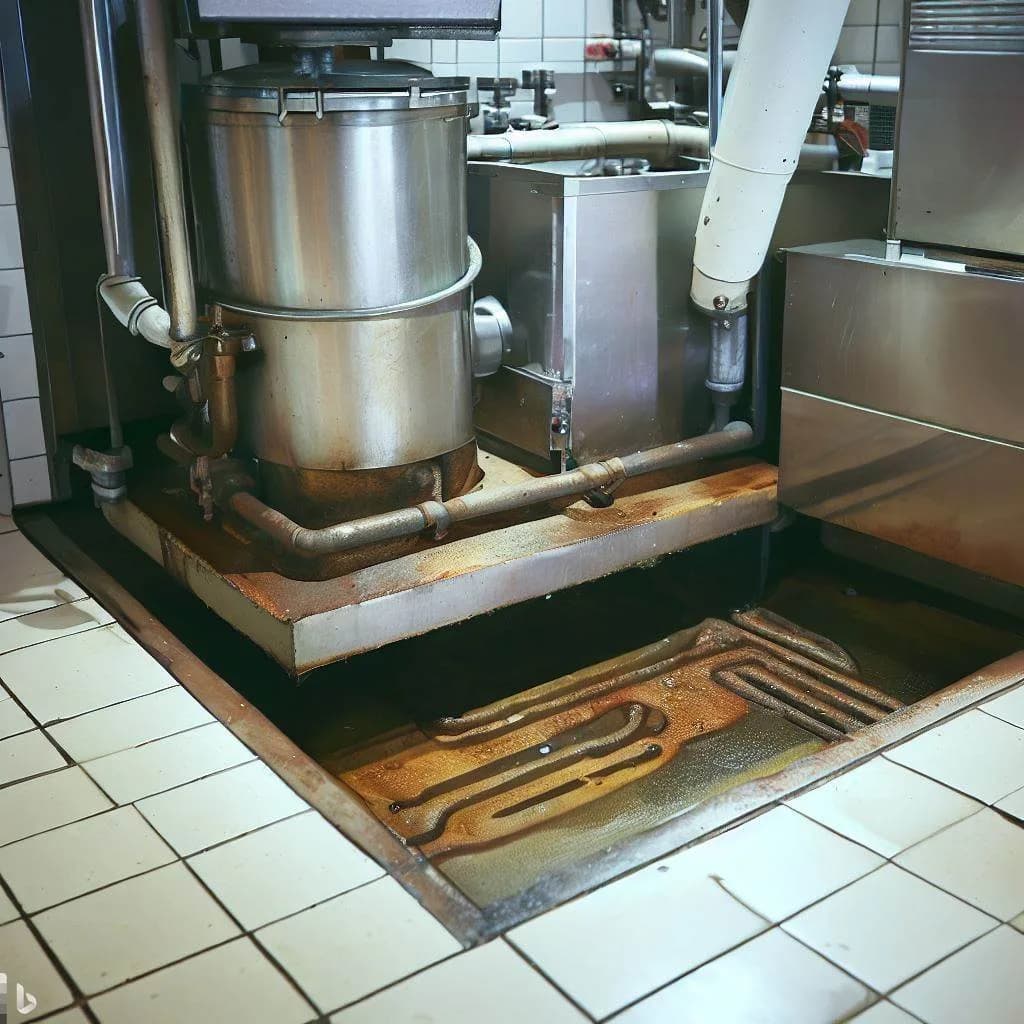
Grease trap problems follow a predictable sequence. They don't start with a backup — they start with something small that's easy to ignore. A drain that takes a little longer to clear. A smell that shows up in the morning and disappears by lunch. By the time the problem is obvious, the trap has usually been past the point of scheduled maintenance for weeks.
This guide covers the warning signs in the order they typically appear, what each one means for your trap, and at what point you're looking at a problem that needs a licensed technician rather than a scheduled service visit.
Stage 1 — Slow drainage
Slow drainage is almost always the first sign. Sinks that used to empty in seconds start taking minutes. Water pools on the floor during a busy service period. The dishwasher backs up at the end of the night.
What's happening: FOG accumulation in the trap has reached the point where water flow is restricted. The trap is not yet overflowing, but it's no longer separating grease effectively. Grease is beginning to escape into the drain lines downstream.
What the 25% rule means here: California FOG regulations require grease traps to be serviced before FOG and solids reach 25% of the total wastewater depth. Slow drainage typically appears when the trap is approaching or has already exceeded that threshold. At this stage, a scheduled service visit — not an emergency call — is the appropriate response. If your next scheduled service is more than two weeks away, move it up.
If your kitchen drain is already backing up, the trap has likely exceeded capacity. That's past the slow-drainage stage and needs immediate attention.
Stage 2 — Persistent odors
The smell that comes from an overfull grease trap is distinctive — a combination of decomposing food waste and sulfuric gas that no amount of cleaning product eliminates. It typically shows up near floor drains and sinks, strongest in the morning before service when the kitchen has been closed overnight.
What's happening: Organic material trapped in the FOG layer is decomposing anaerobically, producing hydrogen sulfide gas. The smell is not a surface cleanliness problem — it's coming from inside the trap and the drain lines. Cleaning the kitchen won't fix it.
If the smell is reaching the dining room, you have two problems: a trap that needs immediate service, and a customer experience issue that's already happening. A sewage smell in the kitchen or dining room that persists after a thorough cleaning almost always traces back to the grease trap or the drain lines connected to it.
At this stage: schedule service immediately. Don't wait for the next routine visit. The odor indicates the trap contents are actively decomposing — which means bacterial growth and the conditions for a health inspection citation if an inspector arrives before service happens.
Stage 3 — Grease appearing in unexpected places
Grease visible around floor drains, backing up into sinks, or appearing near the base of the trap is a sign that the trap has exceeded capacity and is no longer containing FOG. The grease is finding the path of least resistance — back into the kitchen rather than forward into the sewer.
What's happening: The trap is full. FOG that should be captured is either bypassing the baffles entirely or overflowing back through the inlet. Some of it is entering the municipal sewer, which is what LACSD FOG program inspectors test for during sewer line inspections.
At this stage: this is an emergency service situation, not a scheduled maintenance call. Call a licensed hauler. Document the date, time, and what you observed in your maintenance log — this documentation matters if LACSD follows up with a FOG violation notice.
Stage 4 — Complete backup or FOG violation notice
A complete drain backup — wastewater and grease coming up through floor drains or sinks — means the system has failed. Service cannot wait. The kitchen likely needs to stop operating until the trap is pumped and the drain lines are cleared.
The cost differential at this stage is significant. A scheduled grease trap service for a mid-size restaurant in LA County typically runs $350 to $600. Emergency pump-out service for a backed-up system runs three to five times that — before accounting for lost revenue, potential health inspection consequences, and any damage to the drain system from prolonged grease buildup.
A FOG violation notice from LACSD means grease from your facility has been detected in the municipal sewer. In LA County, the response process involves a compliance order, a required reinspection, and documentation that the problem has been corrected. Repeat violations escalate. The violation notice itself is not the end of the process — it's the beginning of a compliance timeline with specific deadlines.
If you've received a FOG violation from the city or sanitation district, the documentation you'll need for the compliance response includes your maintenance log, all hauler manifests from the past service visits, and evidence of corrective action taken.
What you can check yourself — and what you can't
At stages 1 and 2, there are things you can verify before calling for service:
- Open the trap lid and visually inspect the FOG layer. If grease is thick and approaching the baffle level, the 25% threshold is likely close or already exceeded
- Check that the trap lid is properly sealed — a loose or cracked lid allows odors to escape into the kitchen even when the trap isn't overdue for service
- Verify that no one has been pouring fryer oil or cooking grease down drains. Used cooking oil must be collected separately by a licensed used oil collector — it cannot go through the grease trap legally
- Check the trap vent pipe if accessible — a blocked vent traps gas inside the system and forces odors back into the kitchen
What you cannot do yourself: pump out the trap contents. In California, grease trap waste must be removed by a licensed waste hauler and disposed of at a permitted facility. Pumping contents to a bucket and disposing of them in a dumpster or down another drain is illegal and creates the documentation gap that FOG inspectors look for.
How to avoid reaching stage 3 or 4
The operators who deal with emergency backups and FOG violations are almost always the ones whose service frequency didn't match their actual accumulation rate. The 25% rule is the standard, but knowing whether you're approaching it between service visits requires either opening the trap regularly or having your hauler measure the FOG depth at each visit and document it.
Daily practices that slow accumulation: scraping plates and cookware before washing, keeping fryer oil out of drains entirely, and logging any early warning signs — slow drainage, unusual odors — so patterns are visible before they become emergencies.
For the full compliance requirements — service frequency guidelines by trap size, documentation requirements under LACSD, and what a compliant service visit includes — the grease trap maintenance and compliance guide covers the regulatory framework in detail. And for context on how grease trap violations connect to your health inspection score in LA County, the analysis of 31,856 LA County inspections shows how FOG-related citations factor into point deductions.
Frequently asked questions
How often should I clean my restaurant's grease trap?
Regular cleaning prevents clogs, odors, and health code violations. The frequency depends on your kitchen's volume and local regulations, but most restaurants benefit from routine cleanings to maintain proper drainage and avoid costly plumbing emergencies.
What equipment do I need to clean a grease trap?
You'll need heavy-duty rubber gloves, protective eyewear, a face mask, buckets or scoops, scrapers, stiff-bristle brushes, non-corrosive degreaser, and trash bags. Hot water (not boiling) and pH-neutral cleaning solutions are also essential for effective and safe cleaning.
Can I clean my grease trap myself or should I hire a professional?
While many restaurants handle routine in-house cleanings to save costs and maintain better control over hygiene, professional services are also available. The choice depends on your kitchen's needs, budget, and local compliance requirements.
What happens if I don't clean my grease trap regularly?
Neglected grease traps lead to pipe blockages, foul odors, health code violations, and expensive plumbing repairs. In severe cases, poor maintenance can even result in restaurant closures due to non-compliance with health and environmental regulations.
Ready when you are
Running into issues with your kitchen
Our team coordinates vetted technicians across Southern California, same day for emergencies.