
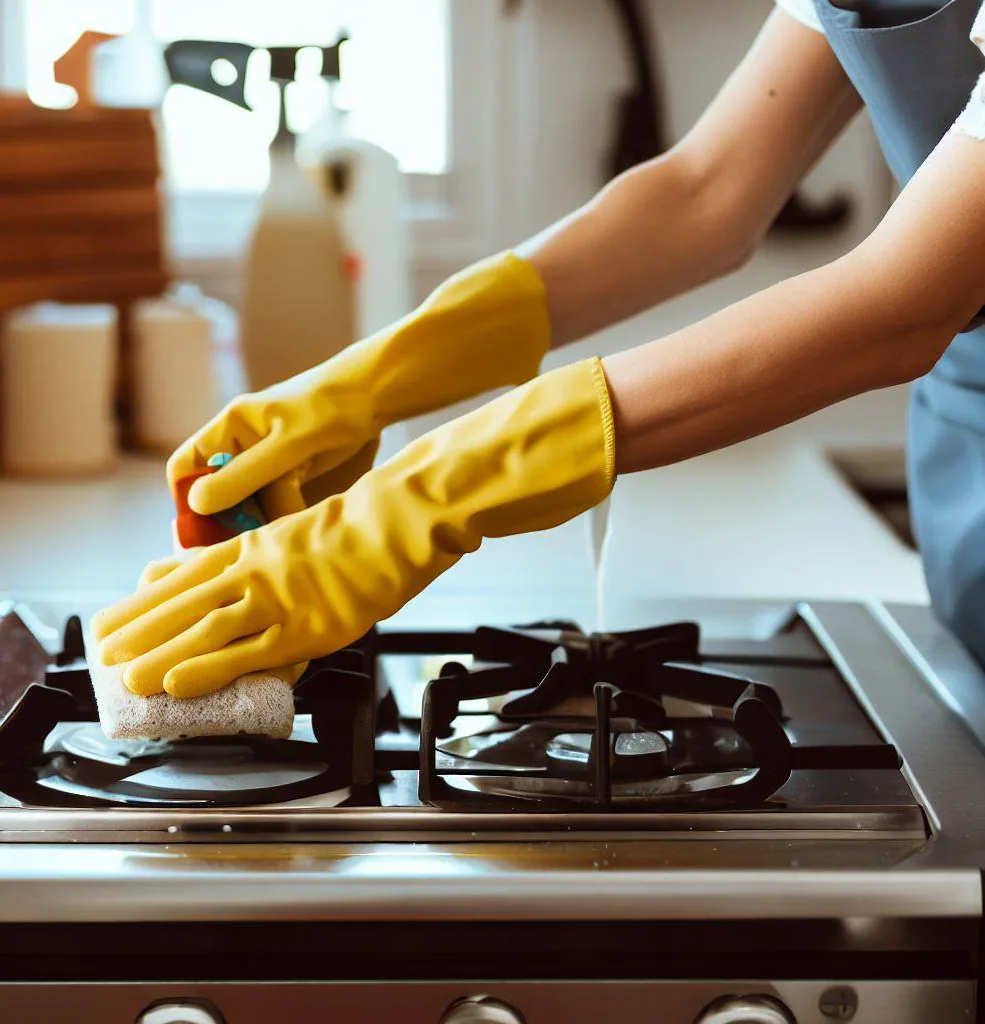
The hot line is the highest-concentration grease environment in a commercial kitchen. Every fryer, griddle, charbroiler, and range generates grease-laden vapor that settles on every surface within reach — the equipment itself, the spaces between units, the floor beneath, and the wall behind. A hot line that's cleaned on schedule is a manageable maintenance task. A hot line that's been accumulating for weeks becomes a fire risk, a health inspection citation, and a significantly harder cleaning job.
This guide covers how to clean a commercial hot line — what to clean, in what order, and what requires professional service versus daily staff work.
What the hot line includes
The hot line encompasses every piece of cooking equipment on the production line and the surfaces directly associated with it:
- Fryers — including fry baskets, oil management systems, and the exterior cabinet surfaces
- Griddles and flat tops — cooking surface, grease trough, and exterior sides
- Charbroilers — grates, radiant elements, drip pans, and interior surfaces
- Ranges — burner grates, burner bowls, drip pans, and oven interiors if present
- Salamanders and broilers — grates, interior surfaces, and grease collection
- Steam tables and holding equipment — pans, wells, and exterior surfaces
- The spaces between units — grease and debris accumulate in every gap between pieces of equipment
- The floor beneath the line — the single most cited surface category in LA County health inspections
- The wall behind the line — grease splatter accumulates on wall surfaces behind cooking equipment and is visible during health inspections
Daily cleaning — end of service
Daily hot line cleaning happens at the end of each service period while surfaces are still warm — warm grease is significantly easier to remove than cold, solidified grease. This is kitchen staff work, not professional service.
Fryers — after oil is filtered or changed, wipe down exterior cabinet surfaces, the area around the fry basket hooks, and the control panel. Clean the floor immediately beneath and around the fryer — this is the highest grease-accumulation zone on the entire line.
Griddles and flat tops — scrape the cooking surface while still warm using a grill brick or metal scraper, working with the grain of the surface. Clean the grease trough and verify it's draining correctly. Wipe down exterior sides and the backsplash behind the unit.
Charbroilers — allow to cool slightly, then brush grates, remove and clean drip pans, and wipe down accessible interior surfaces. Charbroilers generate more carbonized grease than any other equipment type — daily cleaning prevents the buildup that makes weekly deep cleaning significantly harder.
Ranges — remove and clean burner grates and bowls. Wipe down the cooking surface and the oven exterior. Check the area beneath burners for debris accumulation.
Floor beneath the line — sweep and degrease nightly. In high-volume kitchens, this is the area most likely to generate a floor citation during a health inspection. Grease that accumulates under the fryer and griddle for even a few days becomes bonded to the floor surface and requires significantly more effort to remove.
Weekly deep cleaning — scheduled staff task
Weekly cleaning addresses the grease that daily cleaning doesn't reach — the sides of equipment, the spaces between units, and the wall surfaces behind the line.
- Pull equipment away from the wall where possible — the space between the back of the equipment and the wall accumulates grease that daily cleaning doesn't reach
- Clean all exterior equipment surfaces with commercial degreaser — sides, backs, and the undersides of equipment shelves
- Degrease the wall behind the cooking line — a grease-coated wall behind cooking equipment is a citable violation and a fire risk
- Clean the floor beneath and behind all equipment — use a commercial floor degreaser, not a general-purpose cleaner
- Clean hood filters above the line — filter loading accelerates in proportion to hot line cooking volume
- Inspect all equipment for damage — cracked or damaged surfaces, malfunctioning pilots, and grease drainage issues that have developed during the week
Monthly tasks — manager level
- Deep clean oven interiors — commercial oven cleaner applied overnight, rinsed and wiped down before service
- Boil out fryers — drain oil, fill with water and fryer cleaner, boil out to remove polymerized grease from interior walls and heating elements, drain, rinse thoroughly before returning to service
- Clean steam table wells and holding equipment — remove and clean all pans, scrub well interiors, descale if water hardness is causing mineral buildup
- Inspect gas connections and flexible hose fittings for wear or damage — these are not maintenance tasks staff can perform, but staff can identify and flag issues during monthly cleaning for technician follow-up
What requires professional service
Professional hot line maintenance covers what daily and weekly cleaning can't address:
- Gas burner calibration and cleaning — burner performance degrades as orifices accumulate carbonized grease. Professional cleaning and calibration restores performance and gas efficiency
- Pilot assembly cleaning and adjustment — pilots that are slow to light or don't stay lit indicate orifice buildup or adjustment issues
- Thermostat calibration — griddles and fryers that aren't holding accurate temperature affect food quality and food safety compliance
- Fryer element inspection — heating elements that show pitting, corrosion, or uneven heat distribution need professional assessment
- Deep cleaning of charbroiler radiant elements and interior components — the carbonized buildup inside a charbroiler that hasn't been professionally cleaned is beyond what staff cleaning can address
Professional hot line maintenance should be scheduled every 3 to 6 months for most full-service restaurants — quarterly for high-volume kitchens with charbroilers or heavy fryer use, semi-annually for moderate-volume operations.
Health inspection implications
In LA County, hot line cleaning connects to the two most cited violation categories in our dataset of 31,856 inspections: floors, walls, and ceilings (7,896 inspections) and equipment exteriors and non-food contact surfaces (6,535 inspections). Both categories are directly generated by inadequate hot line cleaning — grease from cooking equipment that hasn't been cleaned on schedule accumulates on floors, walls, and equipment exteriors until it's citable.
The floor beneath the hot line is the single highest-risk zone for floor citations. An inspector who looks under the fryer line and finds accumulated grease will cite it — and if the grease has been there long enough, it's also a pest harborage issue that creates risk for a secondary citation.
For the full breakdown of what LA County inspectors are finding — violation categories, citation frequencies, and point costs — the analysis of 31,856 LA County inspections covers the complete dataset. For the cleaning frequency context that determines how often the hot line needs professional service vs staff attention, the hot line cleaning frequency guide covers the factors that affect the schedule.
Frequently asked questions
How often should you clean a restaurant hot line?
You should follow a routine cleaning schedule for your hot line, ideally daily after service and during slow periods throughout the day. Regular cleaning prevents grease buildup, equipment breakdowns, and ensures compliance with health regulations.
What safety precautions should staff take when cleaning hot line equipment?
Staff should wear appropriate protective gear including gloves, aprons, and eye protection, use insulated gloves when handling hot surfaces, ensure proper ventilation to avoid fume exposure, and store all cleaning agents in clearly labeled containers away from food prep areas.
What equipment is typically included in a restaurant hot line?
A hot line typically includes cooking equipment (grills, fryers, ovens, ranges), food holding units (hot food tables, heat lamps, steam tables), and a ventilation system (exhaust hoods and ductwork) to remove smoke, heat, and odors.
Why is hot line cleaning important for restaurants?
Regular hot line cleaning prevents foodborne illnesses by eliminating bacteria and cross-contamination risks, extends equipment lifespan by removing grease and debris, and ensures compliance with health regulations while maintaining reliable kitchen operations.
Ready when you are
Running into issues with your kitchen
Our team coordinates vetted technicians across Southern California, same day for emergencies.