
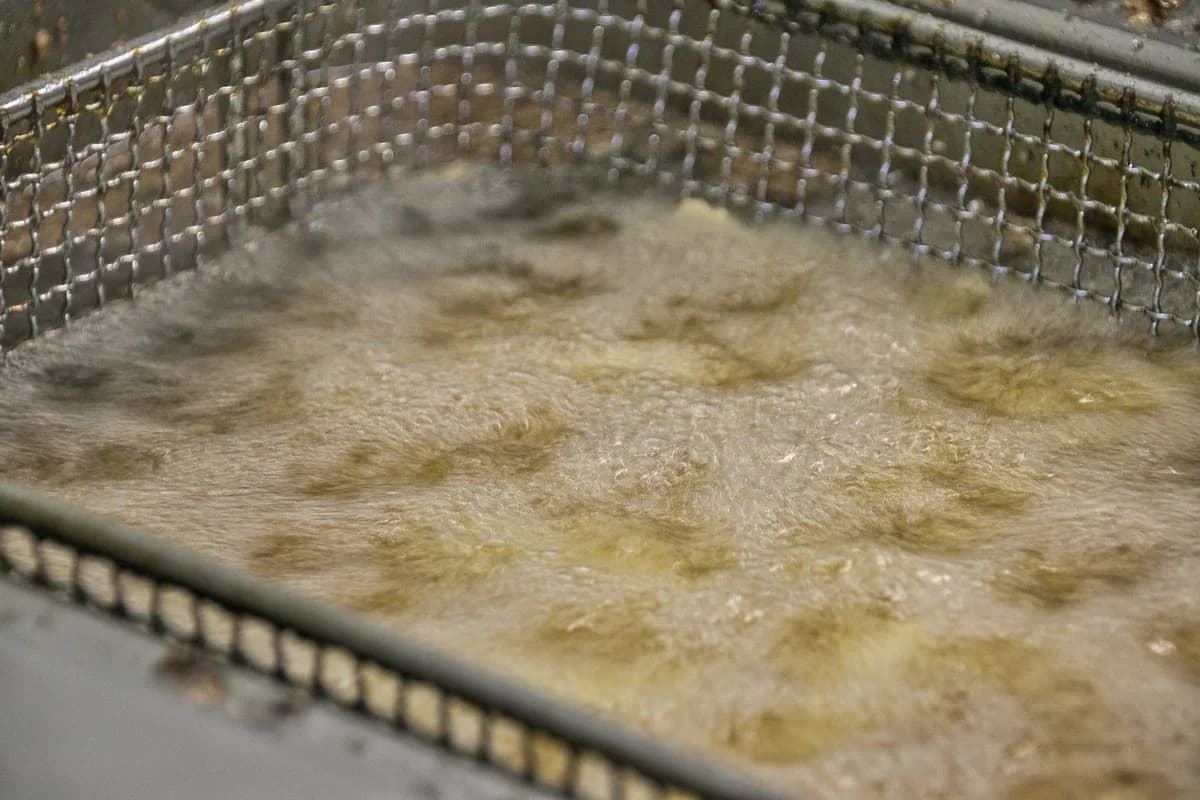
Fryer oil is one of the highest-turnover consumables in a commercial kitchen — and one of the most mismanaged. Operators tend to change it on a gut-feel schedule, or when food quality visibly degrades, which usually means the oil was past its useful life days earlier.
Poor fryer oil management creates three compounding problems: inconsistent food quality that damages your reputation, accelerated wear on fryer components that triggers repair calls, and elevated fire risk that puts your fire suppression system in play. In LA County, all three have direct inspection consequences.
This guide is written for restaurant operators and kitchen managers in Los Angeles County managing commercial fryers across one or more locations.
1. Why Fryer Oil Management Matters
In a commercial kitchen, fryer oil degradation is not just a food quality issue — it cascades into equipment, compliance, and safety territory.
Degraded oil has a lower smoke point. That means your fryers smoke at normal operating temperatures, which triggers your kitchen ventilation system to work harder and, in extreme cases, activates your fire suppression system. An unplanned suppression discharge costs thousands in cleanup, lost service, and inspection re-certification — all because oil management slipped.
LA County Environmental Health inspectors assess fryer cleanliness and grease management as part of routine inspections. Used cooking oil must be stored in sealed, leak-proof containers and collected by a licensed hauler — disposal down drains is a violation. Operators on a consistent used oil collection schedule are naturally better positioned on this front.
The business case is straightforward:
- Food quality: Degraded oil produces greasy, off-flavored food. One bad batch affects reviews, not just that shift.
- Equipment longevity: Carbonized oil residue accelerates wear on heating elements, thermostats, and filtration systems.
- Safety: Lower smoke point oil increases fire risk and puts your fire suppression system under unnecessary stress.
- Compliance: Grease management is an active line item in LA County health inspections.
2. How Often Should You Change Fryer Oil?
There is no single correct interval — the right schedule depends on your service model, menu, and filtration discipline. Use these benchmarks as a starting point:
Quick service and high-volume kitchens
Operations running 100+ frying orders per day should expect to change oil every 2 to 3 days. High heat cycles and constant food debris load degrade oil quickly regardless of filtration habits.
Casual dining and moderate-volume kitchens
At 50–100 frying orders per day, a 4 to 5 day interval is typical — assuming daily filtration. Extend only if oil condition checks consistently pass.
Low-volume and limited fryer menus
Operations frying fewer than 50 orders per day may reach 6 to 7 days, but only with disciplined daily filtration and oil monitoring. Idle oil degrades from oxidation even without heavy use — do not let oil sit unfiltered beyond this window.
Align oil changes with your used oil collection schedule. Operators using Boh's Used Oil Collection service have a natural trigger point: used oil is collected on a set cadence, which creates a built-in accountability loop for oil changes. This also supports compliance: the hauler that collects your used cooking oil must be registered with the California Department of Food and Agriculture (CDFA), and LA County inspectors separately check that oil is stored properly and not disposed of on-site.
3. Signs It's Time to Change Your Fryer Oil
Condition monitoring is more reliable than calendar scheduling alone. Train your kitchen team to flag any of these:
- Dark color: Fresh oil is pale yellow. Brown or black oil is overloaded with impurities.
- Burnt or bitter smell: Oxidative breakdown releases compounds that transfer directly to food.
- Smoking at normal temperatures: If oil smokes at standard frying temperatures (350°F/175°C), the smoke point has dropped — change it immediately.
- Poor food results: Greasy texture, uneven browning, or off-flavors are often oil problems, not recipe problems.
- Surface foaming: Persistent foam when no food is present indicates molecular breakdown.
- Technician flag: During a hot line maintenance visit, a technician may identify oil condition or fryer component issues that indicate oil is degrading faster than expected — often a sign of a thermostat or burner fault rather than a management problem.
4. How to Prolong Fryer Oil Life
The goal is not to avoid oil changes — it is to ensure every oil change happens because the oil is genuinely spent, not because of avoidable management lapses.
- Build filtration into shift-close SOPs: Filtration should be assigned to a named role in the closing checklist, not left as a general kitchen responsibility. Daily filtration extends oil life by 25–40%.
- Control frying temperatures: Operating above 375°F (190°C) accelerates breakdown exponentially. Calibrate fryer thermostats regularly — temperature drift is a maintenance issue, not just an operator habit.
- No seasoning over the fryer: Salt draws moisture into oil, causing foaming and faster breakdown.
- Cover fryer vats when idle: Exposure to air and light accelerates oxidation. Cover between service periods.
- Batch by food type: Avoid frying strong-flavored proteins (fish, heavily seasoned items) in the same oil used for delicate items. Cross-contamination shortens effective oil life.
- Use commercial-grade oils: High-stability blends (canola, high-oleic sunflower, peanut) are formulated for commercial heat cycles. Lower-grade oils degrade faster under the same conditions.
5. Fryer Oil Change Checklist
Daily
- Visual check: oil color and clarity before service
- Skim surface debris during slow periods
- Filter oil after each busy service period
- Cover fryer vats when not in use
- Log oil condition — note any anomalies
Weekly
- Full filtration to remove micro-debris
- Boil-out if performance has declined
- Review oil change log — flag if oil is degrading faster than the expected interval
- Confirm used oil collection is scheduled — do not allow spent oil to accumulate beyond 48 hours
6. When to Call a Professional
Some fryer problems are maintenance issues masquerading as oil management problems. If you are changing oil on schedule and still seeing rapid degradation, poor food results, or excessive smoking — the fryer itself may be the issue. You can schedule a technician through Boh.
Call a technician when:
- The fryer is not maintaining correct temperature despite fresh oil — thermostat or burner fault
- Oil is degrading significantly faster than your normal interval — often indicates uneven heating
- The filtration system is clogged, broken, or not functioning correctly
- You are seeing smoke or unusual odors that persist after an oil change
Boh coordinates Hot Line Maintenance, Used Oil Collection, and Fire Suppression Maintenance across LA County. If a fryer issue is connected to a suppression system concern, one call covers all three.
Frequently asked questions
How do I know when fryer oil needs changing in a restaurant?
Monitor oil condition daily rather than relying solely on a calendar schedule. Change oil when it turns dark brown or black, smells burnt or bitter, smokes at normal frying temperatures (350°F/175°C), or produces greasy and poorly textured food. In a high-volume kitchen, expect to change oil every 2–3 days regardless of visual condition.
Does LA County have rules about used cooking oil disposal?
Yes, and the requirements come from two authorities. LA County health inspectors check that used cooking oil is stored in sealed, leak-proof containers and never poured down drains or into regular trash, which is an active inspection item. Separately, the hauler that collects your oil must be a registered inedible kitchen grease transporter under the California Department of Food and Agriculture (CDFA), which licenses used cooking oil haulers statewide. Using a scheduled collection service with a CDFA-registered hauler keeps you compliant on both fronts.
What happens if you don't change fryer oil often enough?
Delayed oil changes lead to poor food quality (greasy, off-flavored results), elevated fire risk as degraded oil smokes at lower temperatures, accelerated wear on fryer components, and potential health code violations during LA County inspections.
Why is my fryer oil degrading faster than expected?
Faster-than-normal oil degradation is often a fryer maintenance issue, not just an oil management problem. A faulty thermostat, uneven burner heating, or a malfunctioning filtration system can all accelerate oil breakdown. If oil is degrading ahead of your normal schedule despite good practices, have the fryer inspected by a technician.
How does used oil collection scheduling affect fryer oil changes?
Aligning oil changes with your used oil collection pickup creates a natural accountability loop — spent oil is removed on a set cadence, which prevents on-site accumulation and ensures LA County compliance. Operators using Boh's Used Oil Collection service typically find this simplifies their fryer oil management schedule significantly.
Should oil be changed more often when frying breaded or battered food?
Yes. Breaded and battered items shed significantly more debris into the oil, accelerating breakdown. Kitchens frying these items heavily should expect to change oil at the shorter end of their interval range and filter more frequently during service.
Ready when you are
Running into issues with your kitchen
Our team coordinates vetted technicians across Southern California, same day for emergencies.